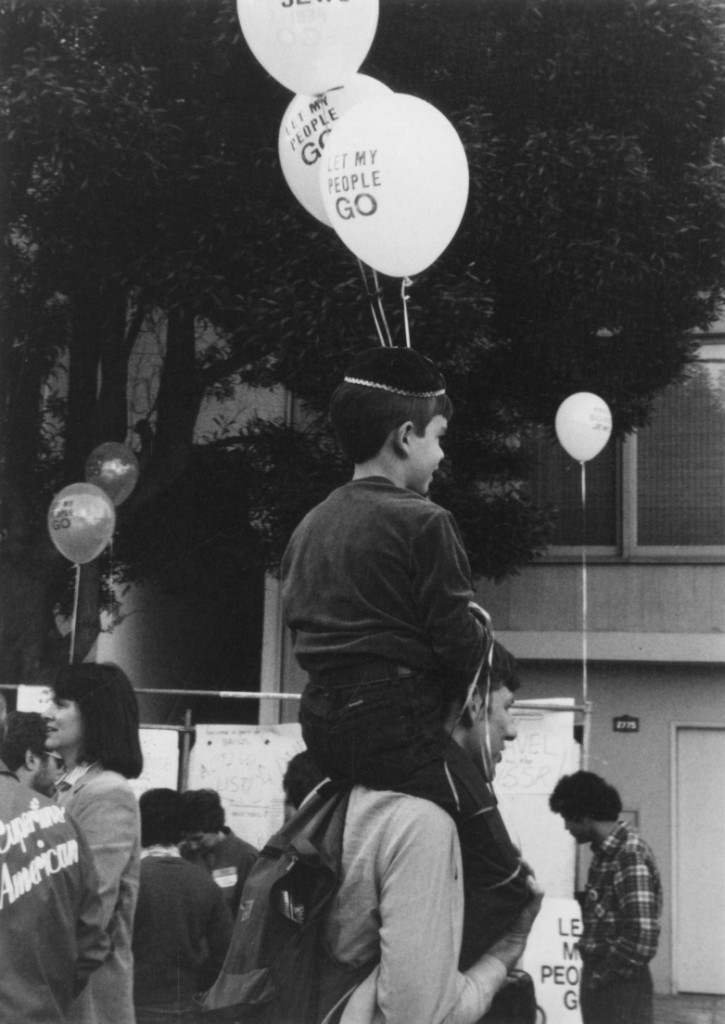
In October of 1984, journalist Ellen Bob announced a joyous occasion in the pages of The Northern California Jewish Bulletin. An impassioned crowd of 4,000 had gathered to celebrate Simchat Torah in San Francisco in defiance of the Soviet regime’s restrictions on Jewish religious life. The rally – one of many signs of the American Soviet Jewry Movement’s strength and fervor – ended with the release of hundreds of colorful balloons over the Bay Area that read “Let My People Go” and “Free Soviet Jews.” Simchat Torah, a Jewish holiday that recognizes the completion of the annual Torah reading cycle, held special significance within the movement. As Bob observed, “Simchat Torah is the only holiday Jews are permitted to celebrate in the Soviet Union,” so it was only fitting that Bay Area Jews would join in their festivities1.
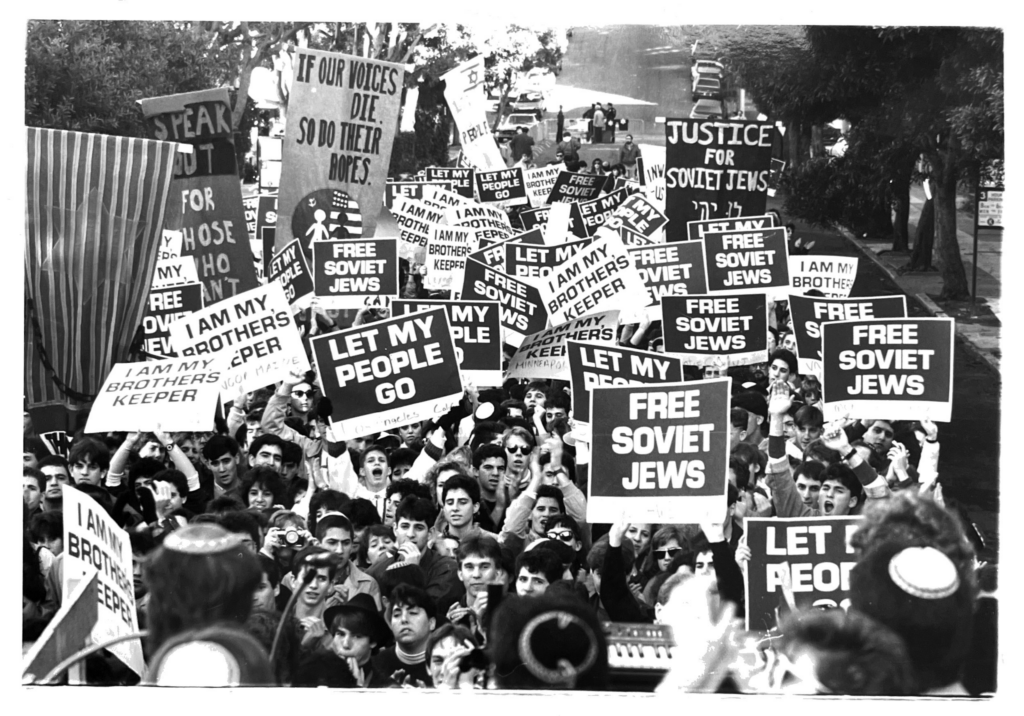
In truth, Soviet officials never legally permitted observance of the holiday, but Jewish crowds had gathered to sing and dance in such large numbers that authorities found them too difficult to disperse in cities such as Leningrad and Moscow. The celebrations represented rare but vital moments of open resistance to a repressive regime, and Jewish activists of the Bay Area understood the value in showing solidarity from across the Pacific. Marshall Platt, editor of Outcry!, the newsletter of the Bay Area Council for Soviet Jews, rhapsodized that the holiday represented “the only time” in which refuseniks could “be together, in public,” proudly “proclaiming their Jewishness.”2 In honor of their Soviet counterparts, Bay Area Jews performed exuberant street dances, played music, and marched with Torah scrolls.
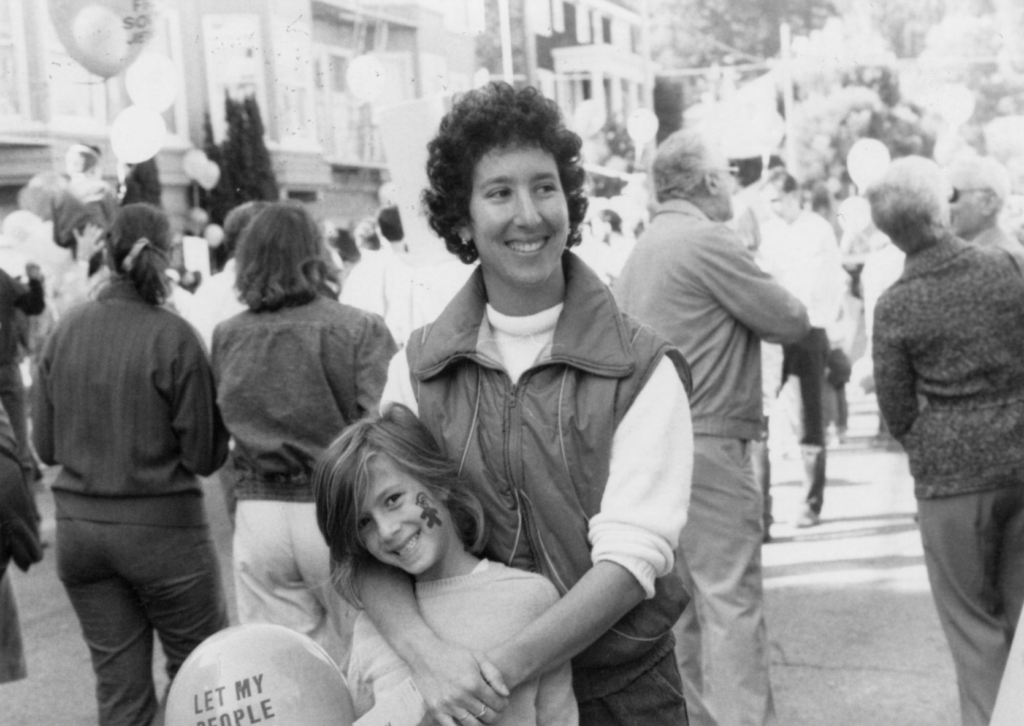
For as much as the holiday invited ebullience and good spirits, the activists did more than celebrate. Each year, the Bay Area Council led participants to demonstrate in front of the Soviet Consulate in San Francisco. Rabbi Doug Kahn, an activist with the organization, remembered his excitement at the opportunity. “We had an advantage here in San Francisco,” he recalled, believing that the presence of an official Soviet government building would generate publicity and get their messages in the news.3 At the end of every Simchat Torah rally, protesters rang the doorbell of the consulate to deliver signed petitions in favor of Jewish freedom.
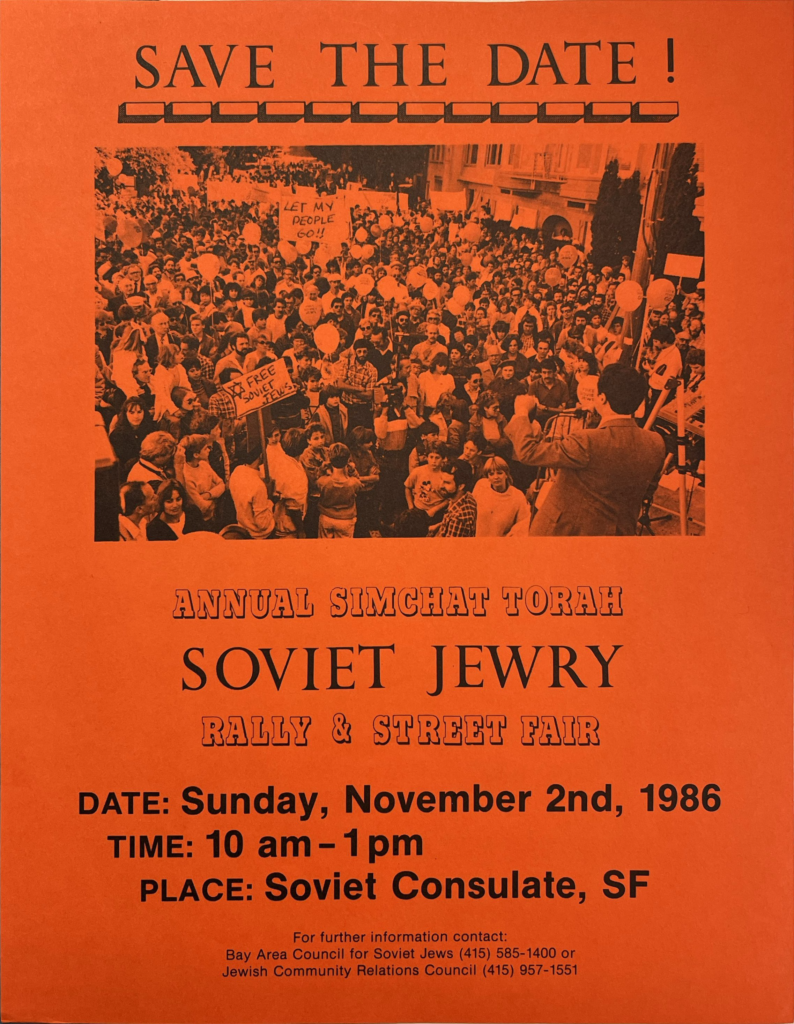
At the 1985 rally – at that time, the single largest gathering in front of the Soviet consulate in San Francisco on behalf of Soviet Jews – five thousand demonstrators raised their voices. Greg Smith, chair of the rally, shared a determined statement that would resonate for years to come as the fight to free Soviet Jews continued: “We Jews and non-Jews have come together today to exercise our First Amendment rights to bring the cause of two million Soviet Jews to our fellow Americans and to the Soviet representatives right here. Ultimately, the ideals of freedom and justice we believe in will become a reality for those not yet able to experience them.”
______________________________
Ellen Bob, “4,000 express hope at rally for Soviet Jews’ freedom,” Northern California Jewish Bulletin, October 26, 1984, 3. ↩︎
“Annual Simchat Torah Soviet Jewry Rally and Street Fair,” Outcry!, November 1986, Bay Area Council for Jewish Rescue and Renewal Records. ↩︎
Rabbi Doug Kahn, “Remembering days of protest at soon-to-close S.F. Russian consulate,” September 1, 2017, The Jewish News of Northern California. ↩︎