Gemma R. Birnbaum: All We Have Standing Between Us is made possible thanks to the generous support of the Knapp Family Foundation. Additional funding provided by the Leon Levy Foundation, the Achelis and Bodman Foundation, the Atran Foundation, and Anonymous.
Visit the companion exhibition in New York City, on view at the Center for Jewish History July 21st through December 31, 2026.
Archival Audio – Henry Fonda Reads the Gettysburg Address on the Ed Sullivan Show: Fourscore and seven years ago, our fathers brought forth on this continent a new nation, conceived in liberty and dedicated to the proposition that all men are created equal. Now we are engaged in a great civil war, testing whether that nation, or any nation so conceived and so dedicated, can long endure.
Gemma R. Birnbaum: In 1961, actor and activist Henry Fonda went on the popular prime time Ed Sullivan Show, and in front of the live studio audience – and millions of viewers who tuned in every Sunday night – recited President Abraham Lincoln’s Gettysburg Address. The speech, which Lincoln gave in 1863, took place at the dedication of the Soldiers’ National Cemetery in Pennsylvania, and served as a rallying cry – and a turning point in a war that had torn the nation apart . Invoking the Declaration of Independence, Lincoln reaffirmed that day that “all men are created equal,” a principle that had been denied to enslaved people for centuries.
Welcome to All We Have Standing Between Us. I’m Gemma R. Birnbaum, executive director of the American Jewish Historical Society.
Today’s episode, A Leap Into the Unknown, begins with the Transatlantic Slave Trade.
Adam Mendelsohn: It is a vast and forced population transfer from West Africa to North America, the Caribbean and South America. And the numbers are beyond belief from an astronomical…we’re talking about between 12 and 14 million humans. I mean, ordinary men, women, children, transported under horrific conditions to the New World. It’s primarily from West Africa to the Caribbean and South America, so smaller offshoot to North America.
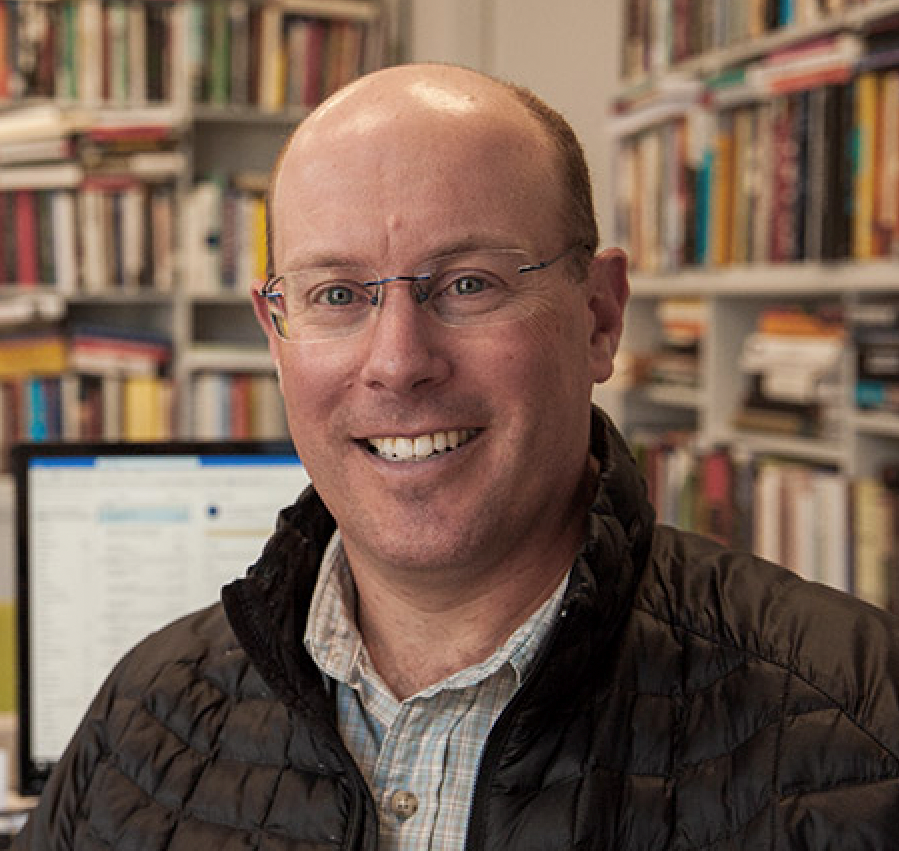
Gemma R. Birnbaum: Adam Mendelsohn is associate professor of history at the University of Cape Town.
Adam Mendelsohn: And it’s a business. This is enormously profitable and will draw upon forced labor in the New World to make enormous profits both in the New World, but also for investors and all sorts of other allied businesses in Europe as well. It really begins in the 15th century, but really takes off in the 16th century.
It involves imperial players, it involves state businesses, individuals, private businesses, et cetera, and, and will continue well into the 19th century. The United States will end its involvement, at least officially in the Atlantic slave trade by 1808, but there are a continuation of ordinary men, women, children, brought illegally to the United States after that date.
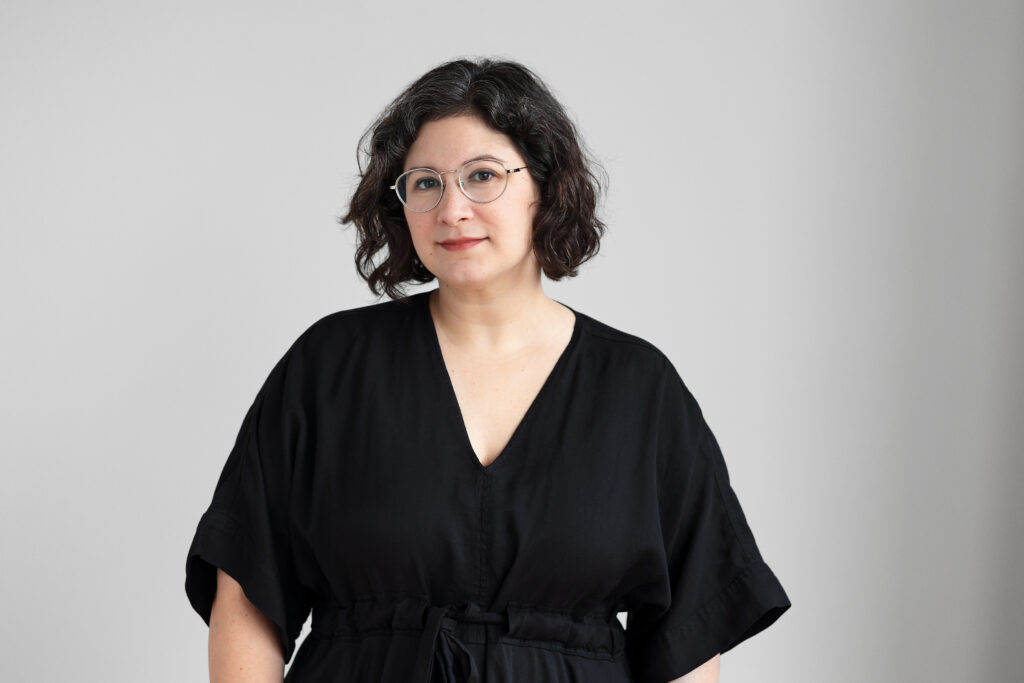
Gemma R. Birnbaum: Shari Rabin is associate professor of Jewish Studies, religion, and history at Oberlin College.
Shari Rabin: When Jews settled in places where slavery was sort of built into the economy, to the social and political life, to the fabric of everyday life, they too participated in this system, which was a form of wealth acquisition. They certainly were not overrepresented or in control of the slave trade as some anti-Semites would have it. But nor did they seem to be morally objecting or abstaining from it for any kind of reason. Jews were involved in the business of slavery and also were enslavers themselves when they had the resources to do it.
Gemma R. Birnbaum: For as long as there was a slave economy, there were abolitionist voices, and enslaved people who rebelled. In the Americas, some of the earliest and largest revolts began in the Caribbean, peaking between the 1760s and the 1830s. Nations including Jamaica, Barbados, Guyana, and perhaps most famously, Haiti, were all the sites of powerful uprisings.
Shari Rabin: So of course, Africans would be the first abolitionists. You know, the people experiencing the horrors of the system would certainly understand viscerally and immediately that it’s wrong. The earliest voices you hear are from Quakers, from particular kinds of peace oriented, non-violence oriented religious groups.
It doesn’t really become a significant, larger movement until the 19th century. And in the US you start to see both the actions of enslaved people to try to overturn this system, for instance Nat Turner, Dan Mark Vesey, et cetera. But then you also start to see white Christian folks like William Lloyd Garrison, the Grimke Sisters of South Carolina, who are also coming to a recognition of the moral wrong of this system, and who are drawing on religious ideas are offering their own sort of interpretations of biblical texts,in order to argue for the end of this system.
Gemma R. Birnbaum: The years leading up to the Civil War were rife with rising political tensions. In the 1840s, and through the 1850s, a rising anti-immigrant, nativist movement began to gain traction. The American Party, more frequently referred to as the “Know Nothing” Party, formed in 1842, a backlash to the influx of recently-arrived German and Irish immigrants. Co-founded and led by Lewis Levin, the second Jewish American ever elected to Congress, the party trafficked in conspiracy theories, including one especially incendiary claim that Catholics were attempting to subvert religious liberty in the United States.
“Know Nothing” rhetoric, under Levin’s leadership and beyond, encouraged and incited violence against Catholics and immigrant groups, including savage riots in Philadelphia that ended in people fleeing their homes, multiple churches burned to the ground, and more than 20 dead Irish Americans.
The Know Nothing Party also began to have electoral success. They soon filled federal, state, and municipal seats around the country.
Adam Mendelsohn: We see increasingly fiery politics in America well before the Civil War. So in the 1850s, as political tensions rise, and as this conundrum becomes more and more clear what is to become of slavery, you see bloodshed, you know, Bleeding Kansas and elsewhere, that there is already violence entering American political life and a real uncertainty about where this is all heading, where this is all going to go.
Gemma R. Birnbaum: The Border War, or what became known as Bleeding Kansas, lasted from 1854 until 1859. The fight over whether or not to allow slavery in the Kansas Territory turned violent in its earliest days, in a period marked by assault, murders in the streets, and electoral fraud, including one large-scale incident in which thousands of proslavery men, armed to the teeth, flooded into Kansas from neighboring Missouri and illegally cast votes for a proslavery Democrat running for Congress.
Adam Mendelsohn: And a variety of efforts, a compromise, to try and work out a path forward. But then the election of Lincoln signals to some white southerners that there is no path forward, in their minds, which is unacceptable to them.
Archival Audio – Henry Fonda Reads the Gettysburg Address on the Ed Sullivan Show: We are met on a great battlefield of that war. We’ve come to dedicate a portion of that field as a final resting place-” For those who here gave their lives that that nation might live, it is altogether fitting and proper that we should do this. But, in a larger sense, we cannot dedicate—we cannot consecrate—we cannot hallow this ground. The brave men, living and dead, who struggled here, have consecrated it, far above our poor power to add or detract.
Gemma R. Birnbaum: On November 6, 1860, Abraham Lincoln was elected President of the United States, in one of the most consequential elections in American history.
Shari Rabin: He’s not a, you know, ardent abolitionist. He’s talking about something much more narrow. He wants to try to keep the union together. But he and his party are associated with the anti-slavery cause. And in December of 1860, South Carolina is the first state to secede from the union.
This continues into the spring of 1861, Mississippi’s early, and then you keep seeing states secede, especially after Lincoln calls up troops to be prepared for the onset of hostilities. Those hostilities then come in April of 1861 at Fort Sumter.
Gemma R. Birnbaum: In the early morning hours of April 12, 1861, while Union soldiers slept, look-outs witnessed a flaming mortar shot race across the sky. The shot was a signal to troops from the newly formed Confederate States of America to mobilize, and within hours, outmanned and outgunned, the Union Army was fighting against an all-out assault.
A civil war had begun, and for the next 4 years, 1 month, and 2 weeks, life would be marked by a blood-drenched, divisive reality.
The majority of American Jews lived in the North, and many Jews enlisted, defending the union even as wartime antisemitism was on the rise. In one infamous event, on December 17, 1862, Union General Ulysses S. Grant issued an order to expel all Jews from his military district.
Adam Mendelsohn: The expulsion order is an extraordinary act. Grant makes this order while campaigning along the Mississippi, he’s trying to capture Vicksburg. Vicksburg is a fortress city along the Mississippi, strategically important city, and it’s a campaign which is disastrous in many ways. Uh, for, for grants, it’s, you know, that he gets stuck in the mud of, of the Mississippi. That of variety of efforts to take Vicksburg fail. So in the background, there’s a certain level of despair, demoralization, difficulty, which is important to understand this. There’s also other context here too, deeper context, which is that the northern economy, particularly manufacturing, cotton manufacturing, industries in the Northeast rely on cotton from the south. And that cotton supply is cut off early on in the war.
Gemma R. Birnbaum: At the beginning of the war, President Lincoln imposed a blockade, which cut off the Confederacy from trading with the North, and other nations. A black market economy soon developed, and Grant accused quote “Jews as a class” of violating the blockade and being responsible for these black market dealings.
Adam Mendelsohn: And we see, again, I think in this mix of frustration, the military campaign plus the frustration at this allowance for civilian traders will pass through their lines. We see Grant and his lieutenants culminating against these civilian traders. What they do is what’s typical of the times, which is to often begin to use the term trader and Jew and smuggler interchangeably. Again, the draws on an earlier wartime antisemitism, which really takes off in 1861 already. And so Grant’s order is a reflection of this frustration, which grows into rage.
Gemma R. Birnbaum: In the South, some Jews prayed for victory, while others supported the war effort financially. There were also southern Jews who served in the Confederate Army, and helped the Confederacy through intelligence gathering. Rosanna Dyer Osterman, a nurse, turned her home into a hospital.
Shari Rabin: Rosanna Osterman is a German speaking immigrant to Texas in the 1830s who becomes a really important early member of the Jewish community in Galveston, Texas. She’s involved in establishing the first Jewish cemetery there in 1852. Her and her husband established a very comfortable life in Galveston, they’re very well to do. Her husband dies in 1861. She stays in Galveston during the Civil War.
Gemma R. Birnbaum: When the Union successfully occupied Galveston, Rosanna treated wounded Northern soldiers in her makeshift hospital. It is said that while providing medical care to an injured Union soldier, she learned of his regiment’s battle plans, and passed those on to the Confederate Army – information that helped the Confederacy retake Galveston. For the remainder of the war, she continued to provide medical care to the wounded.
Among the most high-ranking and well-known Confederate Jews was Judah P. Benjamin, who rose to Secretary of State under the CSA’s President, Jefferson Davis. Born in the West Indies to British Sephardic Jewish parents in 1811, he was a vocal supporter of slavery.
Adam Mendelsohn: Judah P. Benjamin himself was an immigrant in the United States that then he’d born in the Caribbean, came to Charleston as a young man, really grew up in Charleston. And then had a relatively short-lived career at Yale, before striking out, as did many other South Carolinians for the Frontier. So in his case, moving to Louisiana, a number of other Jews from South Carolina did likewise and very successful in Louisiana. He started as a lawyer. And again, successful lawyer became enmeshed within some sort of leading political circles within New Orleans. Now ultimately, attains political office, sort of, it serves in the Senate in the 1850s, representing Louisiana, and forms some sort of relationship with Jefferson Davis in the Senate as well, fellow senator, and certainly speaks out in 1860 in favor of secession as well.
Gemma R. Birnbaum: Known for being an accomplished and charismatic orator, Benjamin resigned from the Senate to serve the Confederacy with an impassioned speech – in which he urged for a bloodless separation while also appearing aggressively defiant against the North.
After his resignation, he fled D.C and returned to New Orleans, hoping to avoid arrest, and after Davis’s appointment as President of the Confederacy, became something of a right-hand man to the leader.
Adam Mendelsohn: He’s recruited by Jefferson Davis to serve as Attorney General within the confederacy. It begins, this meteoric rise shortly thereafter in serving briefly as Secretary of War, but then for much of the war as Secretary of State, which is a tremendously important role given that the confederacy’s strategy, is really to avoid military defeat, but ultimately to win international recognition. That it desperately seeks British and French recognition that this is its pathway to permanence. This is how it’ll survive. Jefferson, David so ju it be Benjamin’s role a Secretary State is crucially important in this. And likewise, the Secretary of State is also responsible for the Confederacy Spy network as well.
Clearly, Judah Benjamin is very competent during the war. That and and a, in a hint and close to Jefferson Davison, there’s a lot of speculation about their relationship as well. What role does Judah P. Benjamin’s Jewishness play in this? And I think what’s interesting here is that Jefferson Davis has another number of other religion members of religious minorities within his cabinet as well. So it’s not exclusively, Judah Benjamin doesn’t necessarily stand out. Exclusively as being different. Likewise, there are other Jews within prominent roles within the Confederacy as well.
Gemma R. Birnbaum: On April 8, 1865, Confederate General Robert E. Lee surrendered to General Grant at the Appomattox court house, paving the way for the end of the Civil War.
As news spread, celebrations erupted across the North, and Union supporters
Just days later, on the evening of April 14, President Lincoln was shot by Confederate sympathizer John Wilkes Booth. He died the next morning, sending a fragile and still-fractured nation into mourning – and into even more uncertainty and chaos.
In the hours that followed, Vice President Andrew Johnson was sworn in as President. Judah P. Benjamin fled to Britain and found a second career as barrister. As for Rosanna Osterman, she wrote an impassioned letter to Johnson for amnesty.
Shari Rabin: The letter that she wrote shortly after the Civil War, in September of 1865, to President Andrew Johnson, was a petition to receive amnesty. Johnson gave a general amnesty to southerners. Otherwise they could have all been charged with treason. And he said, I’m gonna give a general amnesty except for people within certain categories. And that included people who had a significant amount of wealth. So they had to write letters requesting their citizenship back, essentially. And, you know, Johnson himself was from Tennessee. He was not really looking to punish people and some of these letters, including letters by Jews, you see them admitting, listen, I was a southerner. I was allied with the south. That’s that. Please, can you grant me amnesty? But Osterman’s letter really, kind of movingly talks about her loyalty to the union and her opposition to secession. She says that she never supported this cause and would’ve wanted to stay within the union. So it’s really, you know, incredible to see this kind of evidence of Jewish political diversity.
She dies in 1866 during a steamship accident, a very 19th century demise. But her will is really fascinating. She’s very generous. She really spreads her wealth across a wide array of causes, both Jewish and non-Jewish, local to Galveston, Southern, national, and even international.
Archival Audio – Henry Fonda Reads the Gettysburg Address on the Ed Sullivan Show: The world will little note, nor long remember what we say here, but it can never forget what they did here. It is for us the living, rather, to be dedicated here to the unfinished work which they who fought here have thus far so nobly advanced. It is rather for us to be here dedicated to the great task remaining before us — that from these honored dead we take increased devotion to that cause for which they gave the last full measure of devotion — that we here highly resolve that these dead shall not have died in vain.
Gemma R. Birnbaum: Ultimately, nearly four million enslaved people were freed during and after the Civil War. In December 1865, the 13th Amendment was ratified, and made slavery and involuntary servitude illegal, except as punishment for a crime. It was the first of three Reconstruction amendments that would be passed in the aftermath of the war, as the nation grappled with how to rebuild.
Shari Rabin: The war is over and the question is, what is going to be now? What is this country going to look like in the absence of slavery and in the aftermath of this very bloody war. So those are the questions in play. There remain federal troops in the South after the war to try to ensure that there’s order that freed people are freed, in fact. And then there’s all sorts of questions. These southern states are required to create new constitutions, for instance. So they have to have constitutional conventions. There’s all sorts of debates and struggles within the federal government within Congress about how to keep this region in line. A series of acts are of reconstruction acts are passed. New constitutional amendments, abolishing slavery bringing citizenship to and voting to freed people. So there are these building blocks of a new kind of America are being put into place. Some historians call this the second founding. In some ways it really is a new nation being created on the ashes of the old one.
And there’s tremendous political conflict within the south in these years after the war. Democrats versus Republicans, literal fighting in the streets, violence, murder.
Adam Mendelsohn: This is a period of tremendous uncertainty and anxiety for American Jews that certainly part of that uncertainty in amongst the Jewish population in the North relates to what will the status of Jews be after the second founding? What, will, as political leaders within the Democratic Party and other political leaders are warning that there will be consequences for immigrants and consequences for white folk particularly those who are at know lower down the social and economic ladder. So Jews share those. Many Jews share those anxieties. And likewise, those Jews within the South, there’s also this tremendous period of uncertainty. This entire economic and political system is being remade and remade with tremendous violence as Shari has described as well. So it’s a period of tremendous uncertainty and where there are moments where Jews are targeted as well.
Gemma R. Birnbaum: On Christmas Eve 1865, six former Confederate officers gathered in Pulaski, Tennessee. It was there that they founded the Ku Klux Klan. Originally founded as a fraternal social club, the Klan soon became a white supremacist organization, dedicated to racist violence that members deemed “vigilante justice.”
Klan members dedicated themselves to inflicting fear on newly freed African Americans, and did so through acts of domestic terrorism, intimidation, and in some cases, even through service in law enforcement and political office.
Their masked marauding included property damage, rape, and lynchings. A rebellion against the progress and promise of Reconstruction, the Klan also terrorized immigrants, Catholics, and Jews.
Shari Rabin: During the Reconstruction period, on the one hand you have Jewish Republican politicians. On the other hand, you have Jewish Democratic politicians as aligned with the sort of majority, white supremacist party. But then you also have, in the congressional hearings about the first Ku Klux Klan there are descriptions of three Jewish merchants being murdered by the Klan. So Jews are occupying this sort of complicated status. Certainly during the Civil War, there are moments of persecution and discrimination towards Jews, and certainly with the Seligman Affair.
Gemma R. Birnbaum: In June 1877, the prominent Jewish banker Joseph Seligman was turned away from the Grand Union Hotel in Saratoga Springs, NY. Hotel staff cited a policy that stated, “No Israelites shall be permitted in the future to stop at this hotel.”
Adam Mendelsohn: The Seligman affair, as it’s often described, is the birth of modern American antisemitism. Certainly, there are roots earlier in this era that, that the, that to understand the Seligman affair, you actually have to understand then what happens in the Civil War and then the aftermath of the Civil War as, as well. And certainly what we, I think there is. Broad agreement amongst historian historians, American Jewish Life. What follows that? This is the a moment in a way where, which does signal to American society that the exclusion of Jews is acceptable. And particularly with the arrival in the, and certainly the late 1880s, 1870s, but increasingly in the 1880s and afterwards of vast numbers. Of new Jewish immigrants from Eastern Europe that these ideas which have been rooted during the war that Jews are unassimilable or that they are disloyal, that they are un-American in various ways that they don’t know their place in American society. That can never become proper Americans.
Gemma R. Birnbaum: The first wave of the Klan was ultimately disbanded through federal intervention by the late 1870s, but the group would go through several periods of resurgence throughout the 20th century. While the fight to save the Union was a success, the nation grappled with the challenges of Reconstruction for decades.
Archival Audio – Henry Fonda Recites the Gettysburg Address on the Ed Sullivan Show: That this nation, under God, shall have a new birth of freedom. And that the government of the people, by the people, for the people, shall not perish from the earth.
Gemma R. Birnbaum: From the American Jewish Historical Society, I’m Gemma R. Birnbaum. This episode was written by me. Recording, sound design, and mixing were done at Sound Lounge. Archival material is from the AJHS collection, and Sofa Entertainment.
For episode transcripts, additional resources, and links to the collections discussed in this episode, visit ajhs.org/democracy. If you enjoyed this episode, please rate and review us on your preferred podcast platform which helps others discover our series.