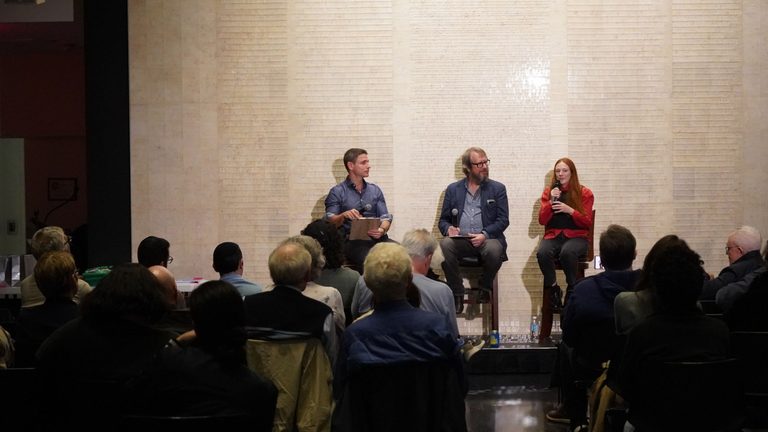
This program originally aired online via Zoom on Wednesday, November 11th at 6:30pm Eastern
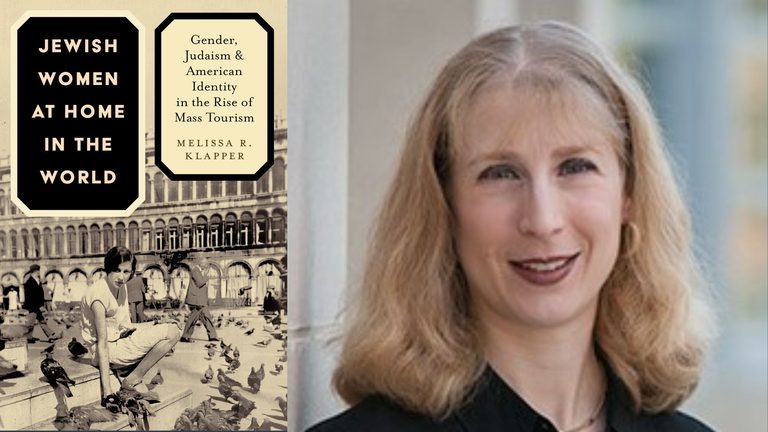
Author Hannah E. Zaves-Greene joined AJHS to discuss her new book, Able to Be American: Disability in US Immigration Policy and the American Jewish Response, with Sarah Imhoff.
The Immigration Act of 1882 included the first federal public charge provision, excluding any immigrant from entering the United States who was “unable to take care of himself or herself without becoming a public charge.” In 1891, immigration enforcement officially moved from state control to federal authority and, at the same time, new classifications and exclusions were added to the public charge law.
“That the following classes of aliens shall be excluded from admission into the United States, in accordance with the existing acts regulating immigration, other than those concerning Chinese laborers: All idiots, insane persons, paupers or persons likely to become a public charge, persons suffering from a loathsome or a dangerous contagious disease, persons who have been convicted of a felony or other infamous crime or misdemeanor involving moral turpitude, polygamists…” – March 3, 1891
Hannah Zaves-Greene discussed with Sarah Imhoff how the 1891 law conflated illness, poverty, and disability with criminality and “moral turpitude.” These restrictive laws were rooted in eugenic theories of the era and enabled Congress to legislate who could, and could not, become an American. To oversee inspection, Congress created the office of the superintendent of immigration, managed by the Treasury Department; this office inspected newly arriving immigrants at ports of entry. Individual inspectors might conduct thorough or cursory assessments, while medical examiners were present and could determine illness; Zaves-Greene describes one case in which an officer consulted folklore techniques to determine conditions such as pregnancy.
Zaves-Greene goes on to discuss tensions between “uptown Jews,” established, cultured Jews of the era who were looking to assist and help newly arrived immigrant “downtown Jews.” Some of this aid came from benevolence and altruism, but in some instances it stemmed from fear that these new arrivals would negatively affect their privileged standing in society. Jews were concerned about their legal standing in a society that tied citizenship so strongly to whiteness. They feared that they could be reclassified as “asiatic” and lose their ability to become citizens (Naturalization Act of 1790).
Topics covered in this discussion:
- Women, especially young women of childbearing age, appear to have been heavily scrutinized during immigration inspections of the late 19th and early 20th centuries. The desire to root out disease and mental disability stemmed from a fear that these women might pass them on to any future children.
- Gendered assumptions around work and income potential, skewed inspectors’ assessment of what a healthy or fit immigrant body should be able to do.
- Under the 1891 law, Pregnant women, if they were not accompanied by a man, would be eligible for deportation.
- Training for social work or for positions in progressive reform circles often included training in eugenics in the late 19th and early 20th centuries.
- Max Kohler, lawyer and immigration rights advocate, worked strategically to ensure that immigration laws were interpreted and administered justly – via a precise and narrow definition.
- Cecilia Razovsky was a social worker, author, and immigrant rights advocate. She worked with the National Council of Jewish Women and held several leadership and committee roles that directly impacted the immigrant experience and influenced public opinion.