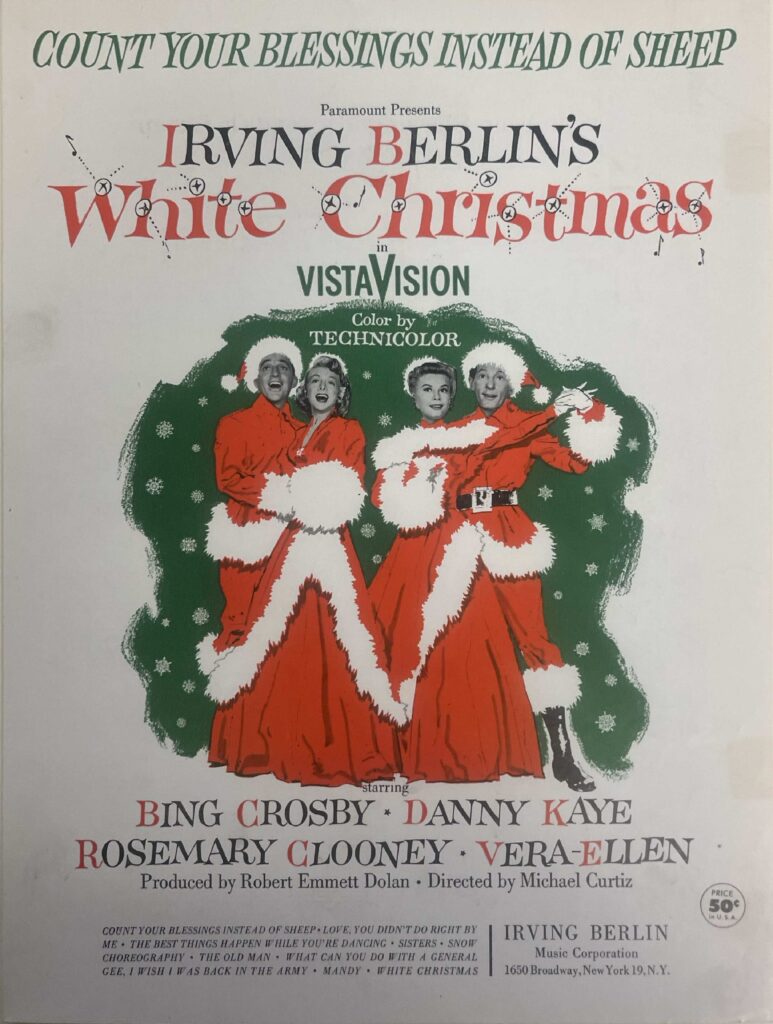
In 1942, amidst a devastating war overseas, a Christmas classic was born in America. Bing Crosby’s “White Christmas,” featured in the musical film Holiday Inn, instantly captivated listeners with its silky vocals and enchanting melody. Unbeknownst to many, it was a Jewish writer, Irving Berlin, who penned the holiday staple that would top the charts for weeks and go on to win an Academy Award. Berlin was one of several Jewish creatives who transformed Christmas festivities in America through their gift of song. “Chestnuts Roasting on an Open Fire,” “Rudolph the Red-Nosed Reindeer,” “A Holly Jolly Christmas,” “Silver Bells,” “Sleigh Ride,” and “Rockin’ Around the Christmas Tree” are just some of the foundational hits of Christmas pop with Jewish songwriters at the helm. These patterns reflect a legacy of Jewish innovation in music and reveal how outsiders to the holiday helped shape its most enduring sounds. With their knack for catchy hooks and pleasing imagery, Jewish musicians redefined what Christmas could mean for a religiously diverse nation.
These Jewish pioneers largely emerged from immigrant families and viewed the music industry as an accessible path toward assimilation and upward mobility. In an era when Jews were restricted from certain professions, music represented a growing economic niche. Artists including Mel Tormé (“Chestnuts”), Sammy Cahn (“Let It Snow!”), and Johnny Marks (“Rudolph”) – whose extensive catalog earned him the nickname “Mr. Christmas” – crafted jaunty and vivid lyrics with universal appeal. Their songs were decidedly nonreligious, revolving around themes of whimsical winters and snowfalls (such as Felix Bernard’s “Winter Wonderland”) and familial togetherness (like Robert Allen and Al Stillman’s “Home for the Holidays”).
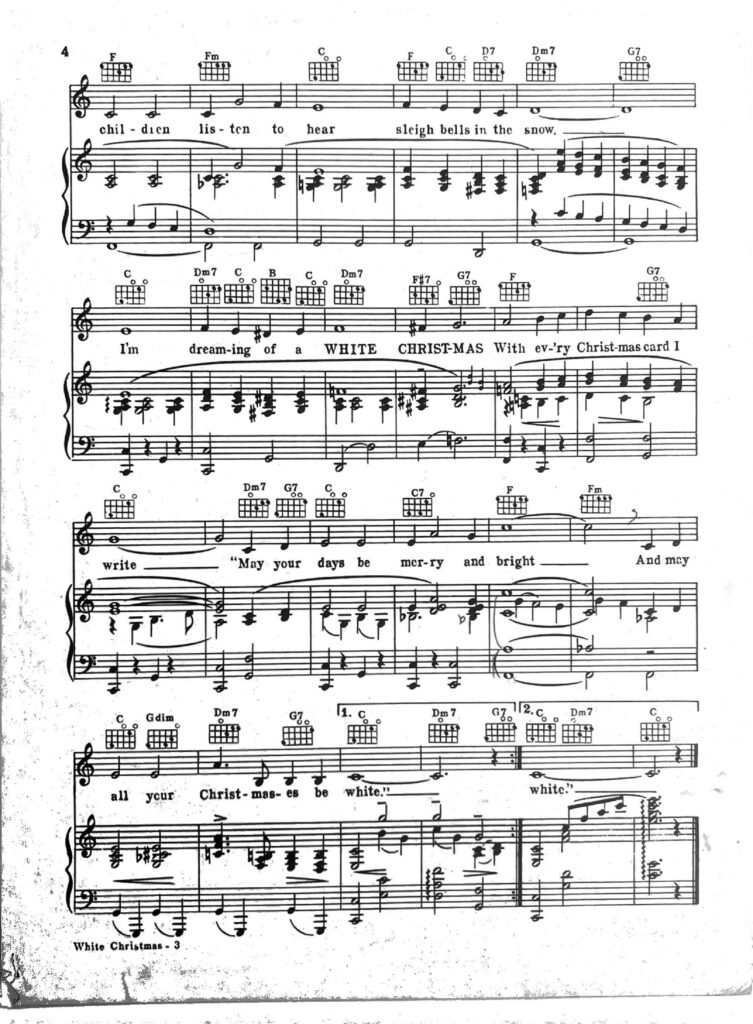
By centering the scenic and festive elements of the Christmas season rather than its theological meaning, Jews rendered the holiday inclusive to every American. Their secularized creations allowed people of all faiths to join the celebration without compromising their religious beliefs. Many songs, including those featured on Berlin’s Holiday Inn soundtrack, were also especially resonant during times of war and uncertainty. “White Christmas,” which remains the best-selling song of all-time, longs for a peaceful, nostalgic past in contrast to the harrowing realities of World War II. His sentimental compositions offered soldiers and civilians alike an idealized vision of America that was worth preserving.
Jewish efforts to embrace the Christmas celebration coincided with their ongoing anxieties about religious identity and belonging in America. Jews continuously negotiated their place within a predominantly Christian society, and Christmas itself became the center of cultural struggles. In 1947, Isaac Bildersee, a Jewish superintendent of Brooklyn public schools, banned the singing of religious Christmas carols in 23 schools under his jurisdiction. The ban included all religious symbols, including Hannukah decorations, adhering to the principle of separation of church and state. The decision triggered outrage. Families and schoolteachers complained that “the United States was founded as a Christian nation,” and those “who promote communistic ideologies” were hoping to “dilute the observance of Christmas.” Fearing antisemitic backlash, Bildersee reversed his decision with the compromise that students could choose not to partake in the singing of religious songs. Yet in 1950, a Jewish pupil in New Jersey suffered consequences for declining to sing a traditional Christmas carol that contained the words “Jesus Christ.” The teacher dismissed her from the school choir, raising unresolved questions about the limits of religious freedom in American schools.

Bad actors continued to depict a “war on Christmas.” Some extremist personalities infamously alleged that Jews had intentionally dethroned Jesus Christ for Santa Claus, a complaint about the secularization and commercialization of Christmas that continues to reverberate. Nevertheless, these animosities failed to drown out the nationwide choruses singing Jewish-penned holiday anthems. From “Santa Baby” to “It’s the Most Wonderful Time of the Year,” Jews have left an indelible impact on the way that Americans engage with the holidays. The permanence of such songs in American culture reflects not only the virtuosity of Jewish artists, but also their successful attempts to weave themselves into the fabric of American life.