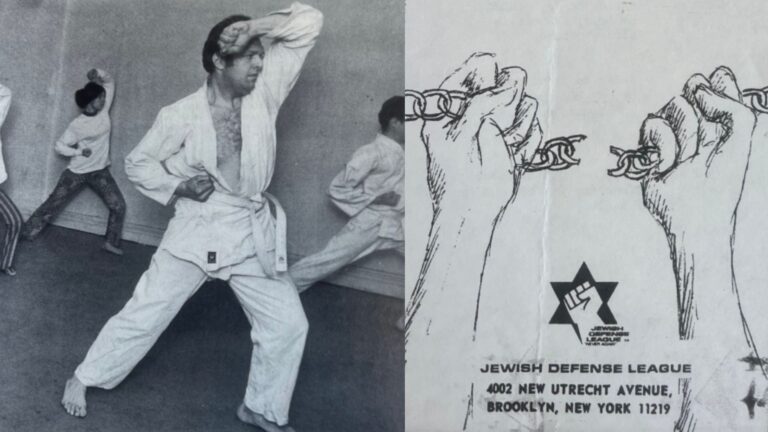
In May 1967, as the Vietnam War brought continued devastation, Rabbi William F. Rosenblum scandalized American Jews when he sermonized against anti-war protesters. The reform leader from New York assailed “scurrilous” demonstrators for “giving the world an image of this nation,” the United States, “as the ‘aggressor’ and the Vietcong and the North Vietnamese as the ‘innocent victims.’” Overseas, during the same year as the rabbi’s speech, the Tiger Force unit of the 101st Airborne Division fired indiscriminately at unarmed farmers, children, and elderly persons in Vietnamese villages. Incidents like these led Jews and others to fiercely question the morality of the war while voicing their opposition to all forms of authority.
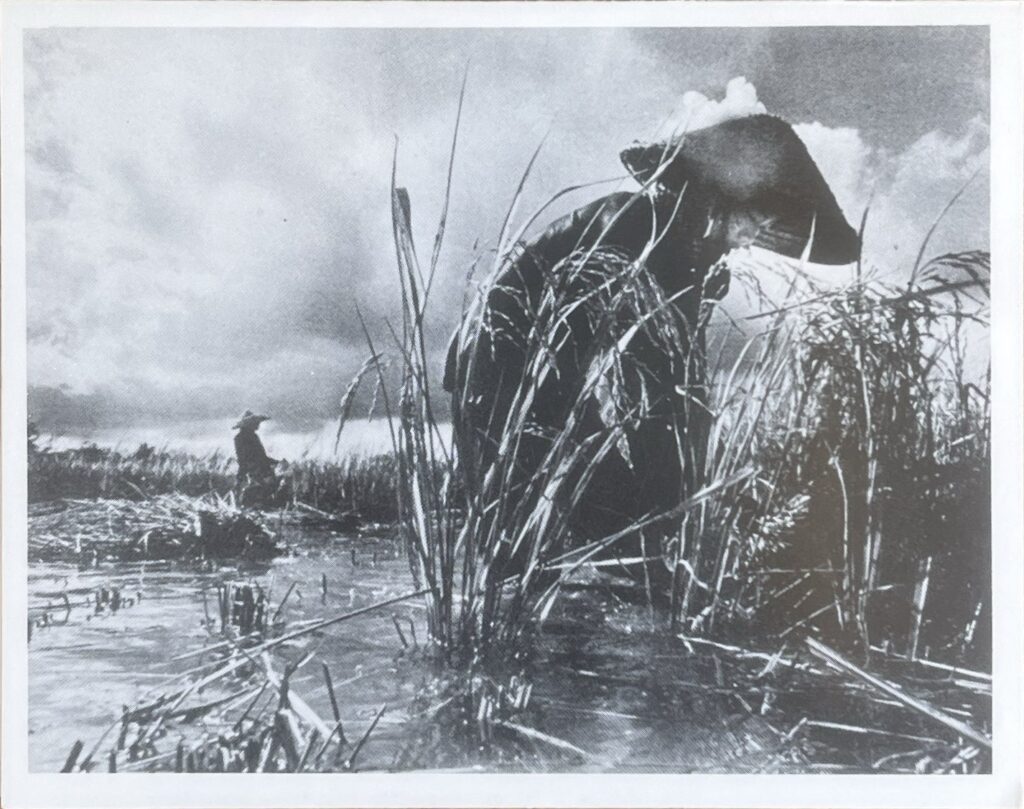
Commentators often argue that the Vietnam War’s brutality prompted Americans to lose trust in their institutions for the first time, a framework that centers the white Christian majority’s relationship with the state. Yet for some Jewish activists, calling out systemic injustice, corruption, and wrongdoing was a time-honored tradition. Throughout the late 1960s and early 1970s, Jews emerged as leaders of the New Left, advancing goals of social justice that extended to ending the war in Vietnam. It would come as no surprise to Rabbi Rosenblum when, following coverage of his sermon in The New York Times, outraged Jews expressed their indignation personally. “You are a hypocritical sycophant,” wrote one Jewish respondent. Another complained, “your sermon the other night absolutely made me ill. That you, a man of God, should not be a messenger of peace is beyond all comprehension.”
For many Jews, Vietnam evoked memories of the Holocaust and of societal compliance with a violent regime. Rabbi Abraham Feinberg, closely associated with the New Left, remarked that “there are situations where civil disobedience cannot be avoided and the war in Vietnam is one of them.” Gesturing to postwar trials in Nuremberg, Feinberg remembered that “Nazis were hanged because they did not disobey when their government demanded them to commit crimes against humanity.” Rosenblum remained agitated. “As anticipated,” he lamented privately, “the mail brought a barrage of abuse, calling me ‘murderer,’ devil, [and] a traitor to Judaism.” Those agreeing with his sermon were “the Harrigans,” but “the Horowitzes and the Cohens and the Levines were the ones who wanted to see me stripped of my rabbinate and dead!”
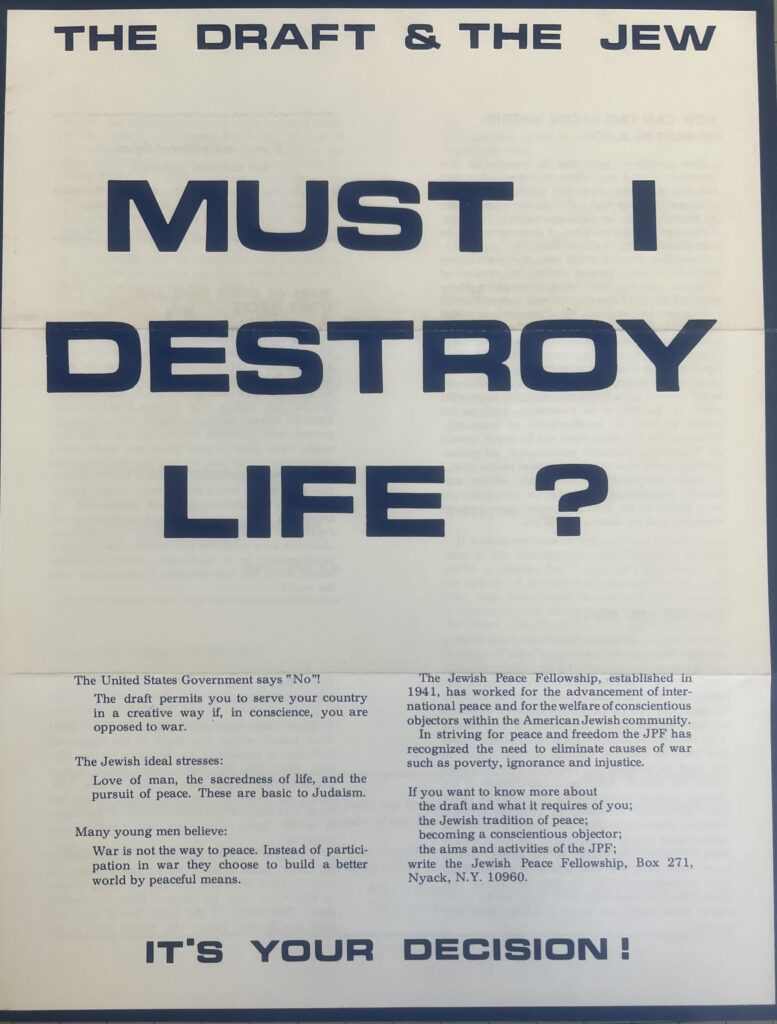
Alongside Rosenblum’s objections, many in high positions noticed Jewish dissent from America’s war policies. Behind closed doors, President Lyndon B. Johnson grumbled that Jewish groups were “absurd” for not backing the Vietnam War given his support for the State of Israel. In an opinion column, Rabbi Steven Schwarzschild, a German-Jewish refugee, retorted, “of course Jews do oppose the war in Vietnam in a disproportionately high
degree,” something “they should be proud of, whatever President Johnson’s reaction.” President Richard Nixon would later scoff that Jews appeared to dominate antiwar protests, and he blamed Jewish conspirators for leaking sensitive details to the public, including the Pentagon Papers in 1971. Driven by a search for truth and transparency, some Jews did play instrumental roles in uncovering government lies about American military actions in Vietnam. Jewish reporter Seymour Hersh broke the story of the infamous My Lai massacre in which American soldiers slaughtered hundreds of Vietnamese civilians.
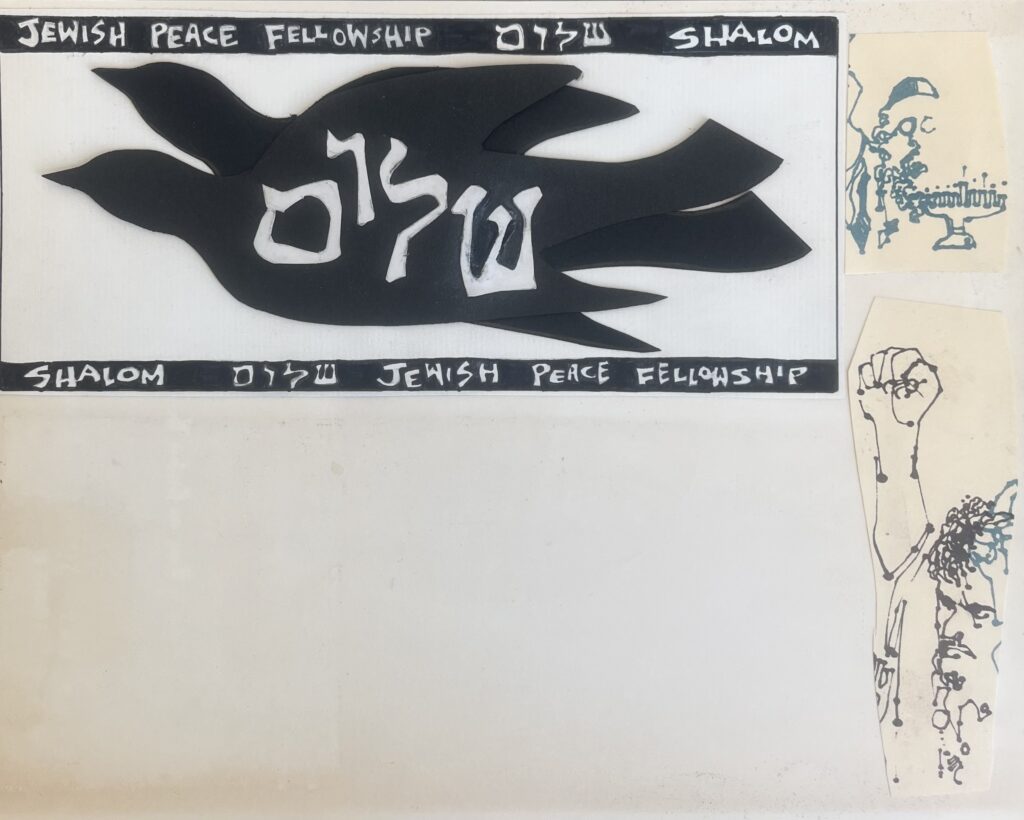
Beyond tense exchanges inside and outside of Jewish communities, Jews organized powerfully in response to the war. The Jewish Peace Fellowship advised young Jews on how to obtain conscientious objector (CO) status. Draft counselor Murray Polner remarked that Jewish youths refused to march willingly “to southeast Asia to fight people who had never threatened them.” Many disaffected youths reconnected with Judaism and its teachings to prepare meaningful CO applications, and some who were rejected by their draft boards
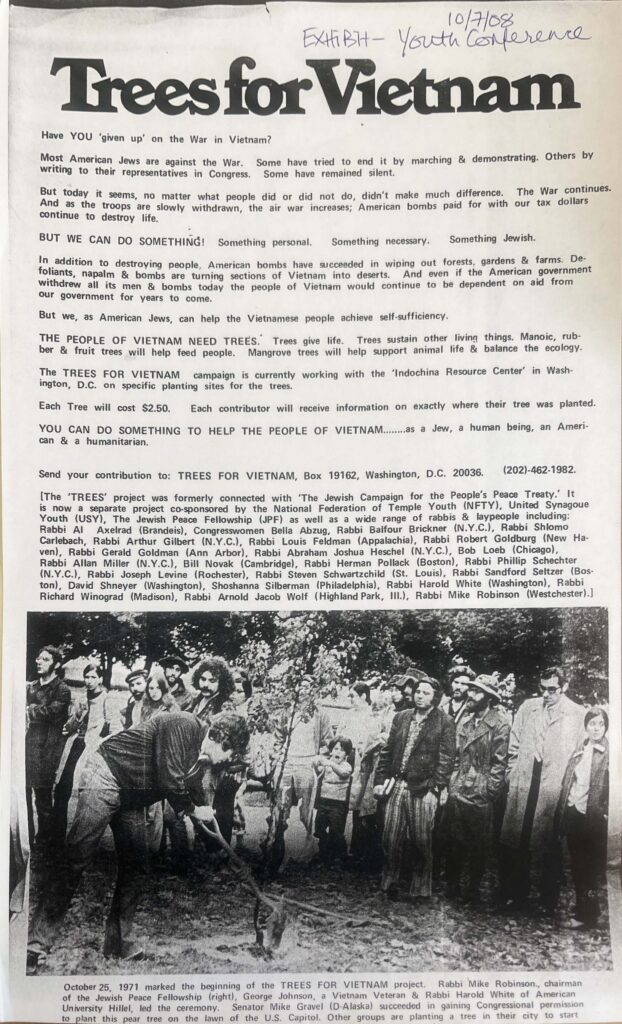
served prison sentences to maintain their pacifism. Jewish counterculturalists formed Trees for Vietnam to alleviate the deforestation of the land by American bombers. They met with North Vietnamese leadership and planted trees in ravaged forests, symbols of peace and renewal. The group’s organizers detested the American policy of “burning whole countrysides from the air, and forcibly moving whole towns into concentration camps,” atrocities that recalled German actions during World War II.
Jews also formed and participated in radical antiwar efforts, aggressively taking to the streets of New York, Washington, Chicago, and elsewhere to voice their anger. The Yippies, best known for staging demonstrations during the 1968 Democratic National Convention, started as a small gathering of Jewish friends at a New Year’s Eve party. Some went further in their approaches. Jewish activists Bernadine Dohrn and Bill Ayers led the Weathermen, a radical offshoot of the student movement that hoped “bringing the war home” could impede American imperialism. Though tactics varied across Jewish groups in the Vietnam era, most understood the importance of resisting the government’s inhumanity. Rabbi Michael Robinson, a civil rights icon, summarized the feelings of many Jews when he remarked, “I have never allowed the government to tell me who is my enemy, and whom I am supposed to hate.”
View the Trees for Vietnam Records
View the Jewish Peace Fellowship Records
View the Rabbi William F. Rosenblum Papers
Listen to The Wreckage podcast episode about the Yippies in season 2 episode 8.