Protests, rallies, and marches are a frequent sight in the Archives of the American Jewish Historical Society. Of the thousands of photographs within our current holdings, New York City stands out for its prolific history of public demonstrations. From President James Buchanan’s 1857 protest of the infringement of American Jewish rights, to the Soviet Jewry movement’s final rally in 1990, these materials represent a history of protest parallel to the history of the American Jewish Historical Society.
Picketing Woolworths
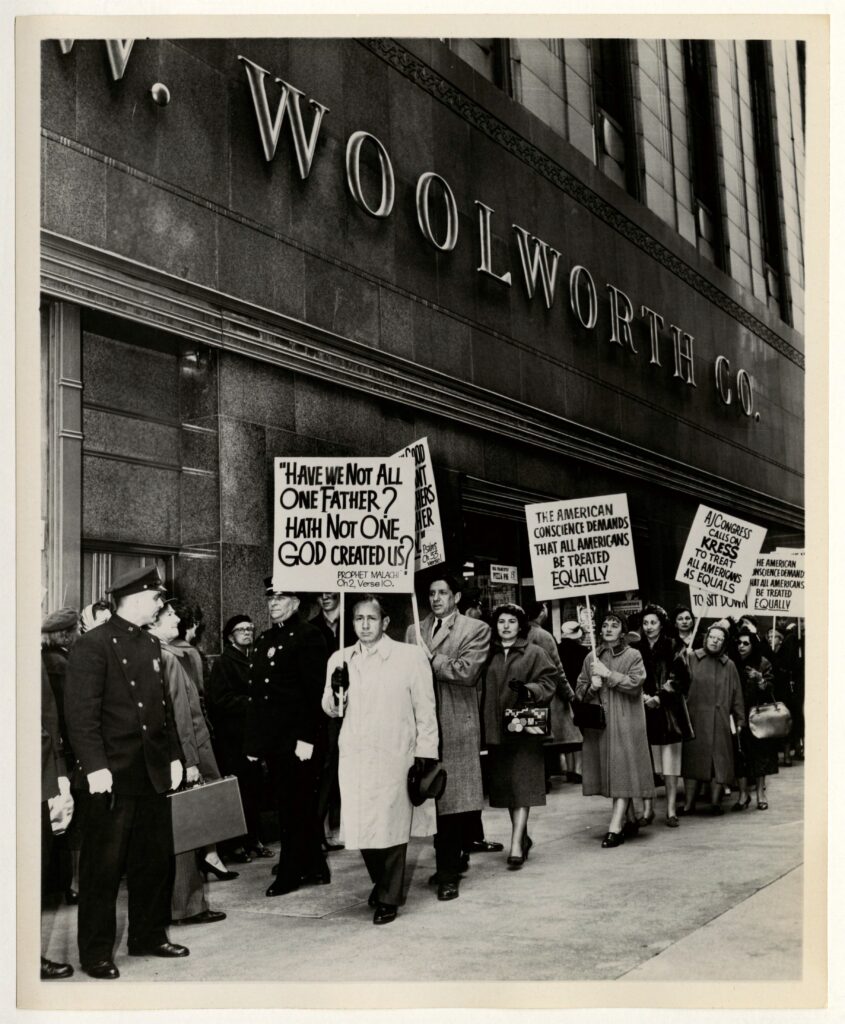
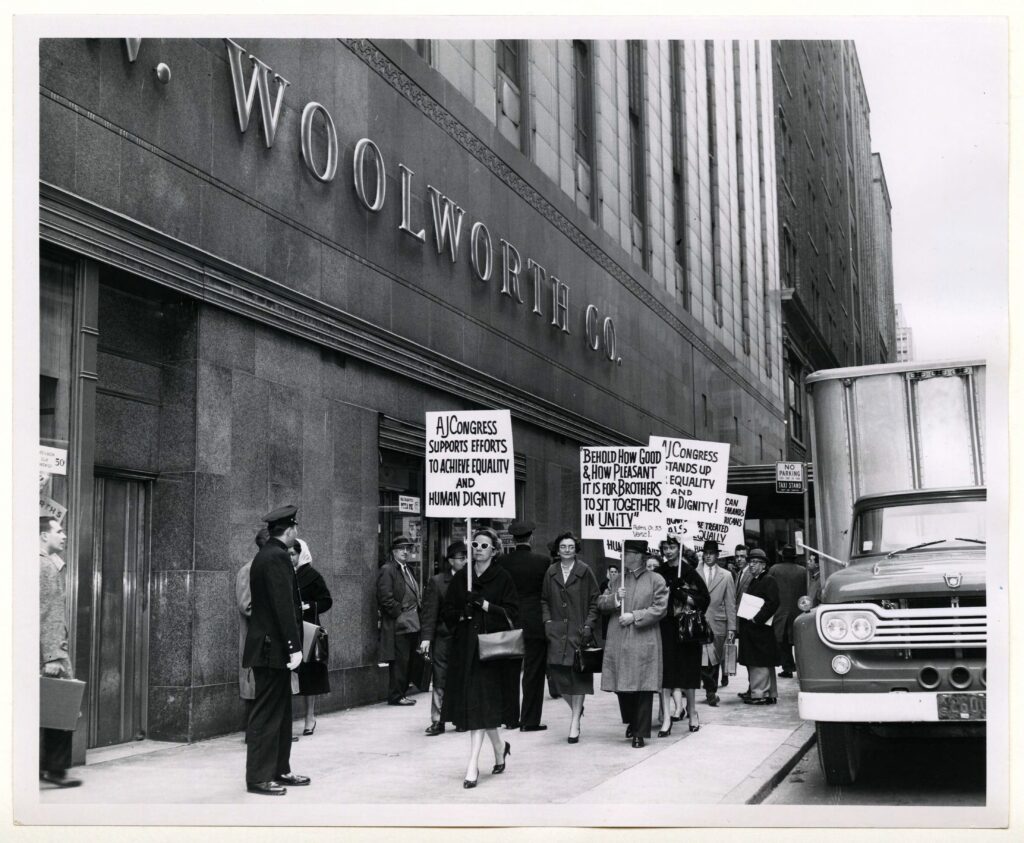
On February 1, 1960, four Black college students sat down at a “whites-only” Woolworth’s lunch counter in Greensboro, North Carolina, and refused to leave when they were denied service. Following this act of protest, the American Jewish Congress joined the Congress of Racial Equality (CORE) and other local organizations to arrange pickets outside of Woolworths locations throughout New York State.
Anti-Nazi Boycott of German-manufactured Goods
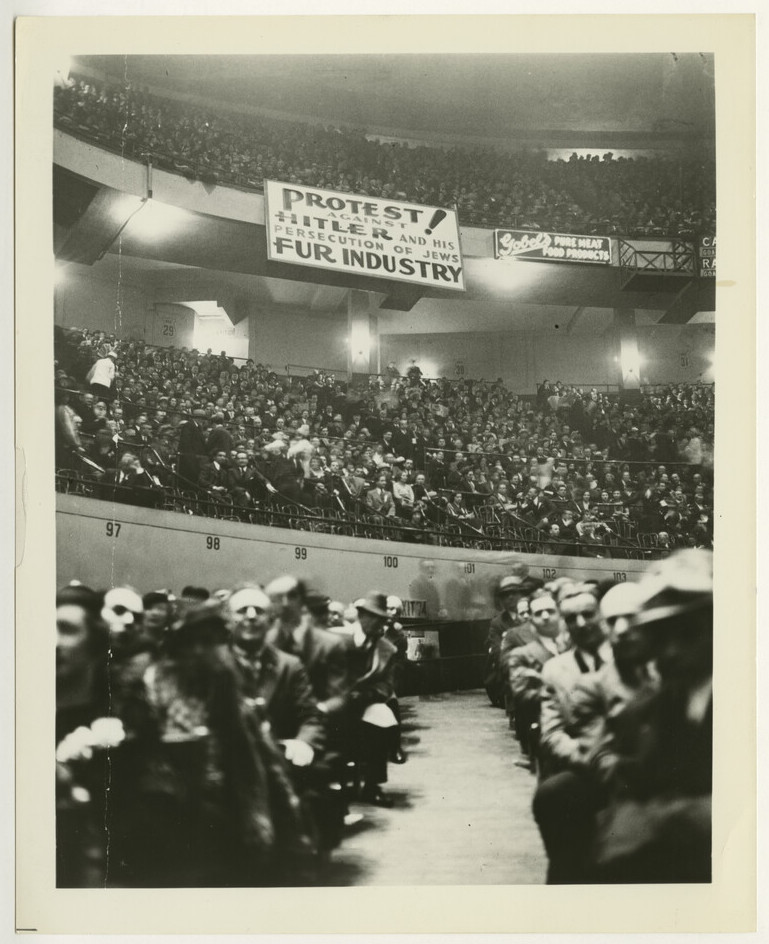
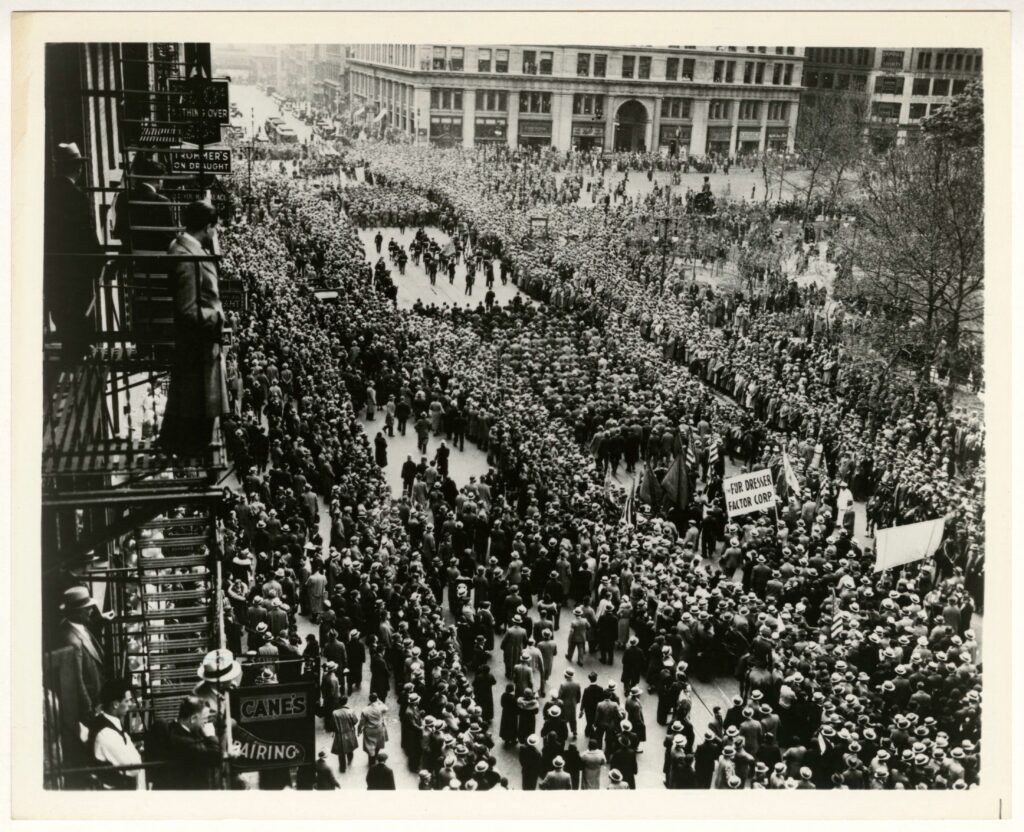
Seeing the violent attacks on German Jews following Hitler’s appointment as German Chancellor in January 1933, American Jews began to organize protests and boycotts of German goods. On March 12, 1933 the civil rights organization American Jewish Congress held a rally at Madison Square Garden in New York City. The American Federation of Labor (AFL) played a central role in the anti-Nazi boycott of German-manufactured goods. Labor leaders throughout the country were called on to protest the destruction of Germany’s free trade unions and the imprisonment of their workers.


Greater New York Conference for Soviet Jewry
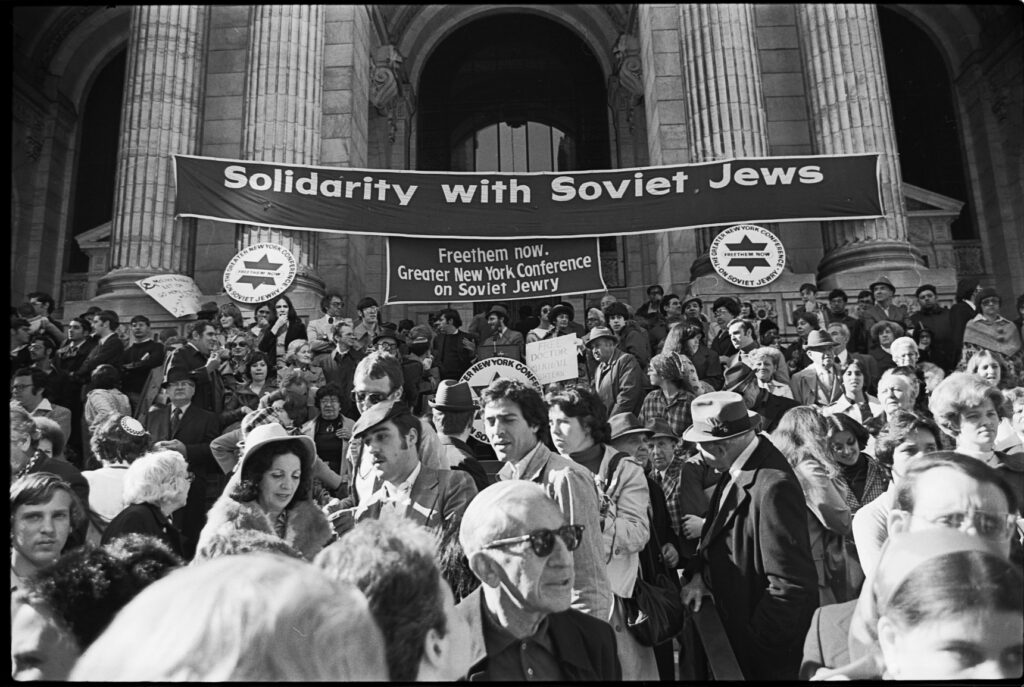
The Greater New York Conference on Soviet Jewry (GNYCSJ) was formed in 1971 by the Federation of Jewish Philanthropies and the United Jewish Appeal of Greater New York, to address the need for an organization that would be devoted exclusively to the problems of Soviet Jewry. The GNYCSJ conducted vigils, demonstrations, meetings, lectures, concerts, press conferences, and memorial services. Solidarity Sundays for Soviet Jewry, the GNYCSJ’s influential series of annual mass demonstrations in New York City, attracted hundreds of thousands of attendees, and served as a model for similar demonstrations on behalf of Soviet Jews nationwide. The breadth and complexity of its programming allowed the GNYCSJ to keep the Soviet Jewry issue in the public eye.