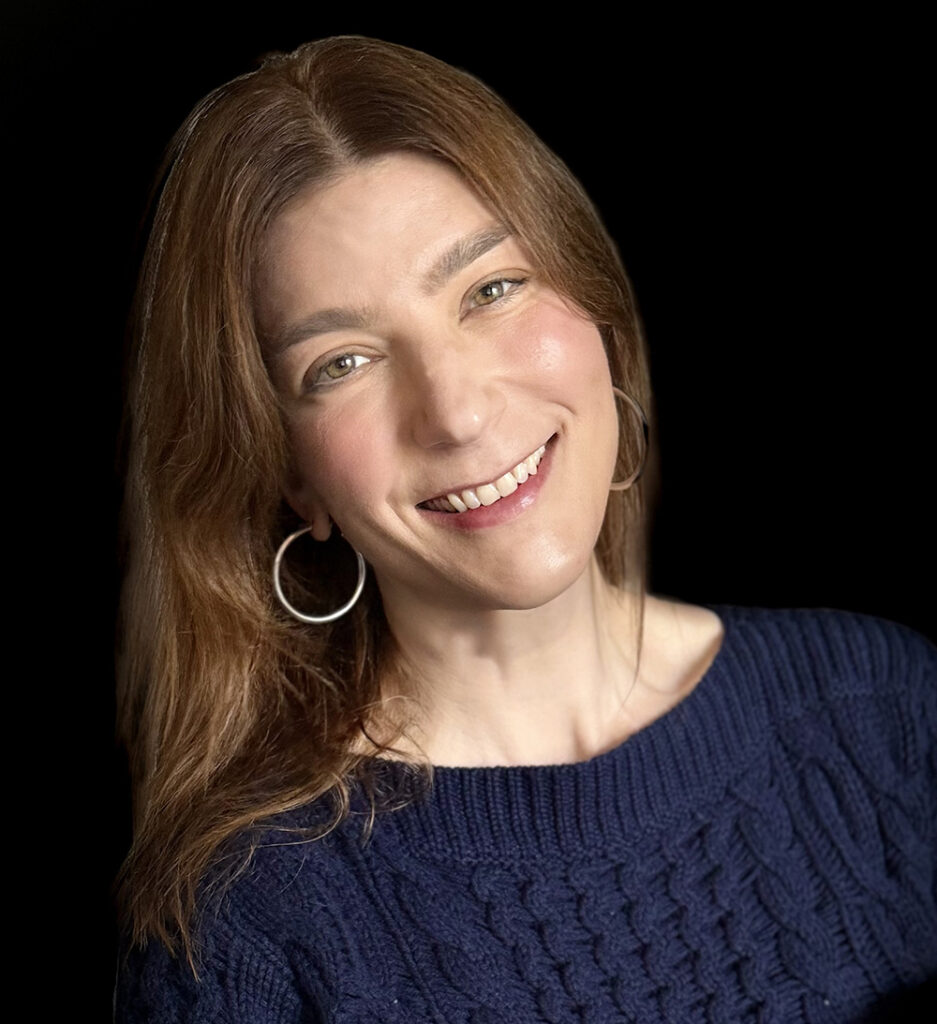
Megan Scauri, Senior Librarian, AJHS: The World in Front of Me is presented by Jay and Gretchen Stein, with generous support from the Knapp Family Foundation, the Philip and Muriel Berman Foundation in Honor of Alan Bloch, Scott and Dianne Einhorn, The Karetsky Family, and Michael and Corrie Koss.
In NYC? Visit the companion exhibition on view at the Center for Jewish History, now through May 2026.
Bill Aron: I’ve always thought of my photography being an expression of who I am, what I feel, what I’m interested in. And life, it seems to me, is figuring out not only what you want to do, but who you want to be. And it’s a process. It’s not, “Okay, I’m gonna be this way, and it’s done,” but it’s a process that’s changing.
Host Ruth Ellenson: That’s Bill Aron, prolific photographer of Jewish life. I’m your host, writer Ruth Andrew Ellenson. I was fortunate to grow up being photographed by Bill, and welcomed the opportunity as an adult and a journalist to explore the legacy of his work, and the context in which it was created. Over the course of our series, we’ll travel with Bill across five decades, and hear his stories about documenting Jewish communities around the world.
From The American Jewish Historical Society, welcome to The World In Front of Me with Bill Aron. This is episode 1: Introducing Bill Aron.
Sound Engineer: We are rolling.
Ruth Ellenson: Oh, we’re rolling, okay. Well, this is very exciting. All right, now we’ll start. Welcome, Bill Aron.
Bill Aron: Thank you so much for that wonderful introduction. That was really quite lovely, and I’m happy to be here.
Ruth Ellenson: It is my great honor to interview you. I have had the privilege of knowing you my entire life, so I can say I am truly a lifelong fan of your work.
Bill Aron: As I am of you, watching you grow into young adulthood, young womanhood and maturity.
Ruth Ellenson: Maturity. That’s the new euphemism for middle age. (Bill laughs) I like it. I’ll take it.
Tell me a little bit about how you grew up. Did you think about being a photographer as a child?
Bill Aron: Best answered with the story of how I got my first camera. My mom took me to Atlantic City for a little holiday. It was just a year after my dad died. I was ten years old at the time. And uh, those days, kids just ran around freely, wherever they were. And my mom had some friends there. We were on the boardwalk—Atlantic City’s famous boardwalk. And she was talking to friends, and I just sort of ran off. And after a while, I got to a place called Steel Pier. And I walked in, and right at the entrance of—it’s like an arcade, a bit open air, and it was out over the water. And I walked in, and the first booth was this giant roulette wheel. And I watched it go around a few times, and there was this sea of stuffed teddy bears on the wall behind—you know—where you viewed. And I had a nickel in my pocket—pre-inflation. I took out my nickel, put it down on number 48, and lo and behold, it landed on—the roulette wheel landed on 48.
So, the man looks at me, and I’m sort of excited, jumping up and down, and he goes to take out one of the giant stuffed teddy bears. And I said, “No, I don’t want that.” And he said, “Well, what do you want?” And he was kind of annoyed. And I looked around, and there was one set, a Brownie Hawkeye camera set with camera and flash, and everything. And I said, “I want that.” I seem to remember that he really didn’t want to give it to me, but he had no choice. So I got the camera, and I went running back to where my mom was to show her what I had gotten. And literally, there was something in that purchase, I think, that kindled some idea that photography would be in my future. But I was raised with a certain philosophy of life that being a photographer really wasn’t something that I should consider. And it took me probably longer than most people to figure out that I really could do what I wanted to do.
Ruth Ellenson: And had an instinct for it as a child. You were immediately drawn to it.
Bill Aron: When I was ten, eleven, and twelve, there was a—in my neighborhood, there was a local newspaper that came out weekly. And there was a group of stores that I delivered to. And they—one was, I guess, the forerunner of a Fotomat. And the store always had this strange odor in it because they all had their own dark rooms in the back in those days. Nothing was, of course, automated. And one day I had paused in the store because I was collecting the monthly fee. And I finally screwed up my courage, and I said, “What is that smell?” And the owner of the store that I was dealing with, he said, “Oh, come here, I’ll show you.” And he took me in the back room, which was lit with a red light bulb. And he happened to have a negative and the enlarger that he was working with. And he showed me how he made a print. He exposed the paper and took it through these various liquids. And to me, it just seemed like magic.
Host Ruth Ellenson: Bill was always interested in other people’s stories.
Bill Aron: I understood that I was somewhat shy. And it was difficult for me to come out and quiz people. And so I used to work at it—sometimes successfully, sometimes not so successfully. I didn’t have this language then, but in today’s language, I would say that I thought everybody has a story. And everybody’s story is worth hearing and understanding. And so I would pursue them that way. I came of age photographically in the heyday of black-and-white street photography in the 1970s. That was the Cartier-Bresson decisive moment. You anticipated a certain moment where the interaction reached its peak geometrical expression. For instance, if you think of a person jumping when they’re at the apex of their jump. And I was more interested in relating to the people; I remember that clearly while I was photographing and talking to them and play, sort of engaging in a little play with them.
I mean, I really had no concept of what a career was, what career I would eventually wind up in, how I would make a living—nothing. And I considered it, so I said, Well, maybe I’ll go to graduate school.
So I went to Chicago and studied Sociology.
Ruth Ellenson: So you complete your PhD in Chicago, and that’s where you met your wife, Isa Aron.
Bill Aron: Yes, yes.
Ruth Ellenson: And then, where do you two decide to go together? Because, at this point, you don’t—you’re not pursuing an academic career.
Bill Aron: I accepted a job as head of research in the drug addiction programs at Camarillo State Hospital north of Los Angeles. And at a certain point, it became clear to me—I write articles based on my research. And it became clear to me that the only people reading the articles were other people writing articles, and they needed places to reference. So I decided that this was not for me.
Ruth Ellenson: You still don’t have any sense that you’re gonna be a photographer at this point.
Bill Aron: No, however, UCLA at that time had an excellent adult education department. And I took a night class in how to develop film and beginnings of photography. And I would spend more time in the dark room than I—at the hospital than I did in my office.
Ruth Ellenson: That’s really funny. So, it was—it really began as a hobbyist then?
Bill Aron: Kind of, yeah. Yeah, that’s a good word for it.
In my early years in photography, I was fortunate enough to get an assignment to photograph the Pucker family in Boston, who owned a gallery on Newbury Street that was called the Pucker/Safrai Gallery. And during that time, I asked Bernie—Bernie and Sue Pucker, the two, and they own and run the gallery jointly—I asked him if he represented any photographers. And he said, Well, I really don’t understand photography. And I said, Well, I’d love to show you mine. I showed him my portfolio of Lower East Side prints, that work largely involved photographing the old Jewish immigrant generation. And he said,” Okay, well, I’ll take this box of prints back to the gallery, and we’ll see.” The box was given to the director of the gallery, a woman named Anita. At the same time, there—you know, this is luck. Luck is always of paramount importance.
Ruth Ellenson: In a photograph and in a career? (Bill laughs)
Bill Aron: And it just so happened that there was a group going through the gallery—because he was known for representing a lot of Jewish artists, from B’nai Brith—and Anita started going through the photographs. And this crowd slowly gathered around. And they must have sold five, ten photographs during—at that particular time. So this was incredible. And then that was the start of a very long career I’ve had with Bernie and his wife Sue Pucker.
Ruth Ellenson: That isn’t just luck. That is—I believe the term we’re going to use there is beshert.
Bill Aron: The fact that they were there at that particular moment—I mean, you know, if the truck had had a flat tire, they wouldn’t have been there.
Ruth Ellenson: All the things in the universe that had to go right, at that moment, did.
Bill Aron: Yeah.
Ruth Ellenson: That’s amazing. Was that the first time you thought of yourself as a photographer?
Bill Aron: The first time that I thought of myself that this is something I can do, was at the first gallery show. I walked into that gallery, and there was a mob of people, and my photographs were all over the wall. And I thought to myself, “wow, this is the best feeling in the world.”
Ruth Ellenson: I believe you have been a photographer for over 40 years. Is that right?
Bill Aron: I would say my photography career started in 1975.
Ruth Ellenson: And do you have a particular philosophy as a photographer that you’ve honed over that time?
Bill Aron: I have to say that Garry Winogrand, who was a photographer in the fifties, sixties, and seventies, the only photographer to have three one-man shows at the Museum of Modern Art in New York, he used to say that a photograph must be more interesting than the thing photographed. And that’s my Bible. That’s what I strive for—don’t always succeed. He also said, “there’s no photographer worth his weight in salt that doesn’t realize that when he goes out on his shoot, and he comes back, no matter how much people like what he did, he knows what he missed.” And that’s also true for me. (laughter)
Ruth Ellenson: So funny. I can see the—you know—desire to always improve, right? It’s a feedback loop.
At what stage in your career did you feel like you began to master photography as a technical art?
Bill Aron: It’s still happening.
Ruth Ellenson: Perpetual student?
Bill Aron: There are photographers whose entire career was built on one camera body and—you know—one model of that manufacturer. Now, there are just—every year, they come out with new sensors, new processing, and it’s just almost impossible to keep up with it.
Ruth Ellenson: Is there a Jewish story that you see being told through the body of your work of—of photographing Jewish people in the Jewish community?
Bill Aron: The story that I hope is conveyed is the complexity of the Jewish experience, I have to say in America. I don’t know how generalizable it is to Europe or even to Israel, but just how there are all different kinds of Jews who look different and behave differently. And that complexity makes us all part of the American Jewish experience.
Ruth Ellenson: Is there a commonality you see to the global Jewish experience as relates to your photography?
Bill Aron: The commonality, I think, what binds them all together in the complexity of the Jewish experience is how they practice their Judaism and their values.
Ruth Ellenson: And your work really offers a visual documentation of the variety of that experience.
Bill Aron: Right.
Ruth Ellenson: I think the idea that you began your professional career as a sociologist and then ended up as a photographer, doing work that really is portraiture with stories, as you described it, it’s—it’s a way of documenting society on a deeper level.
Bill Aron: Yeah, I think—I think my time spent as a sociologist, certainly, and particularly the study of sociology, has informed my worldview in the sense of what I find interesting. But I think it was my life before I studied sociology that pointed me in the direction of sociology.
Ruth Ellenson: And why was that? Your life before sociology pointed you in the direction of wanting to study it?
Bill Aron: When my dad died, it made me different from everybody else in the neighborhood. And when my mom died, it made me different from everyone else in the high school. And so, I began—I think those two events served to make me an observer as opposed to a participant. In sociology, I found the field of participant observation which is—which I like to think of myself as doing now—but I think that idea of watching the world in the beginning as a youth, as a high schooler, seeing how people reacted to me because my parents were no longer alive solidified something in me about observing the world around me.
Host Ruth Ellenson: From the American Jewish Historical Society, I’m Ruth Andrew Ellenson. This episode was written by Rebeca Miller and produced by Sarah Hopley. Our executive producer is Gemma R. Birnbaum. Recording, sound design, and mixing were done at Sound Lounge and Studio Awesome.
For episode transcripts, additional resources, and links to a selection of Bill’s photographs that inspired this episode, please visit ajhs.org/bill. If you enjoyed this episode, please rate and review us, which helps others discover our series.