
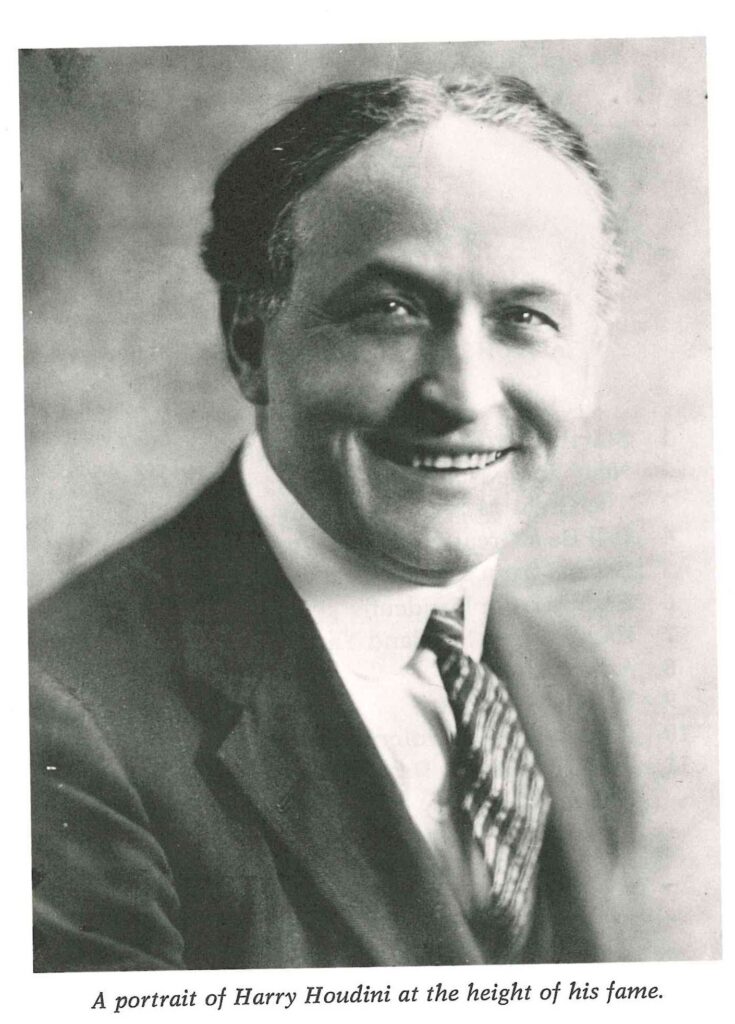
Harry Houdini is known for his many feats of escape from seemingly impossible odds. While we still don’t know all of his secrets, his background gives some insight into his approach to crafting his magic and illusions. In 1874, his family moved to Appleton, Wisconsin from Hungary to flee religious persecution. Born Ehrich Weiss, Houdini was the son of Rabbi Sámuel Weisz, the rabbi of the first Reform congregation. The family moved to New York in 1891, where Houdini sharpened his magic skills. Today, a sculpture titled “Metamorphosis” stands at his childhood home as a testament to his lasting impact as a magician.
As the son of a rabbi, it appears that Houdini was instilled with a sense of discipline, most notably with respect to the pursuit of knowledge and commitment to study. Houdini made a habit of obtaining and dismantling locks and studying every restraint he encountered to familiarize himself with their construction. When German police accused him of falsifying his entire act, perhaps it was Houdini’s sense of discipline that led to his eventual victory. The authorities put him through a series of trials in which he was required to escape under a variety of environmental conditions, whether in public or in private, and he succeeded each time. Aside from his work as an escape artist, Houdini made a habit of debunking spiritualists. This was particularly important to his reputation, as there were those who insisted that Houdini’s act was due to possession of supernatural abilities. Although he refuted these claims, his wife, Bess, is said to have jokingly referred to his supposed supernatural abilities to encourage Houdini when he was faced with a particularly difficult escape.
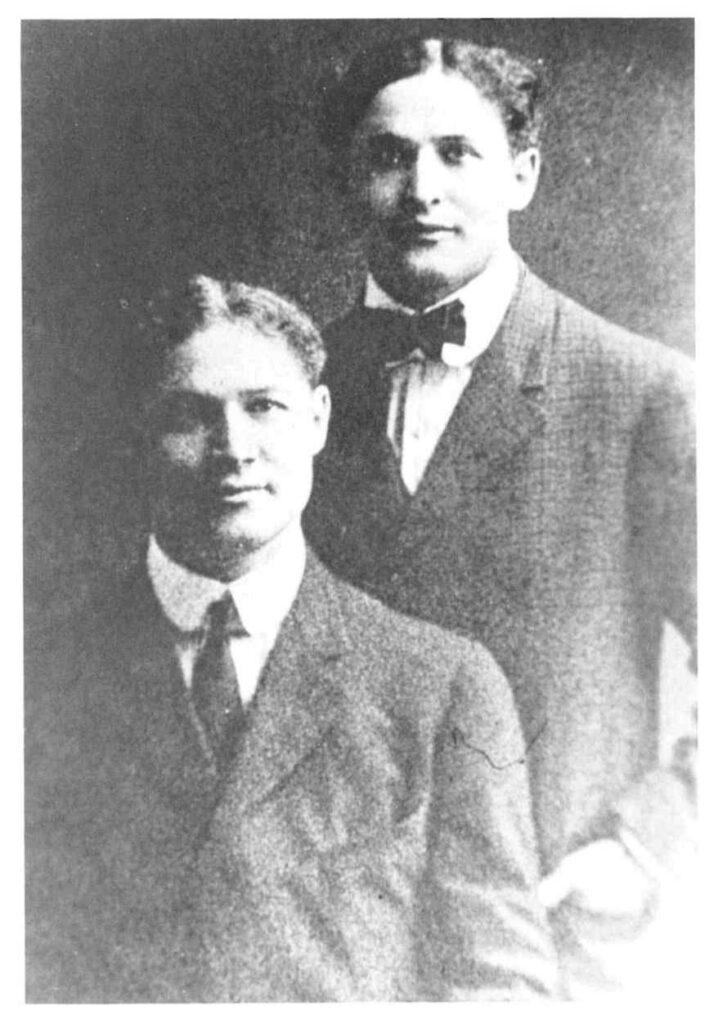
Houdini’s journey to worldwide stardom was fraught with periods of little or no work. We see evidence of Houdini tailoring his illusions for specific audiences, sourcing new tricks from second-hand books and other magicians. His repertoire evolved from simple card and scarf tricks to the mystery box escape (which he renamed the “Metamorphosis” and later the “trunk trick”), to a handcuffs escape, to a strait jacket escape, and finally, to a water escape. As he traveled, he developed a gimmick of escaping from his host town’s local jail. He constantly revised his illusions, determined to innovate and grow to maintain the audience’s suspense. This “escape magic” led to what he called “the challenge,” in which he asked audience members to bring their own handcuffs, from which he would escape.
His admiration for and dedication to magic as a discipline was apparent in the home he eventually purchased. He packed the rooms with various books, props, and articles he had collected through the years. This, in addition to his career, was the legacy he left, so that others would be inspired as he was.
Sources
- Ester, Leland D. (1985). The young Harry Houdini in Appleton. [Appleton, Wis.] : [Outagamie Historical Society], [1985].
- Harry Houdini Papers (P-434)
- Phillip Applebaum Collection (P-583)
- White, Florence Meiman. (1979). Escape! The life of Harry Houdini. New York : J. Messner, [1979].