On November 1, 1946, in the first ever game of the National Basketball Association (then the Basketball Association of America), Ossie Schectman soared to the basket and scored on a fast break layup, recording the first points in NBA history. It was a moment that ignited fans of the fledgling sport, and it was only fitting that a Jewish player representing the New York Knickerbockers (later the Knicks) did the honors. In its earliest years, basketball emerged as a “Jewish game,” closely associated with urban immigrant communities of the Northeast. Jewish children took an interest in the accessible and inexpensive activity, hanging peach baskets from telephone poles in cities like New York, Boston, and Philadelphia. For decades, Jews dominated the sport and embraced it as a pathway to assimilation, inclusivity, and healthy living.
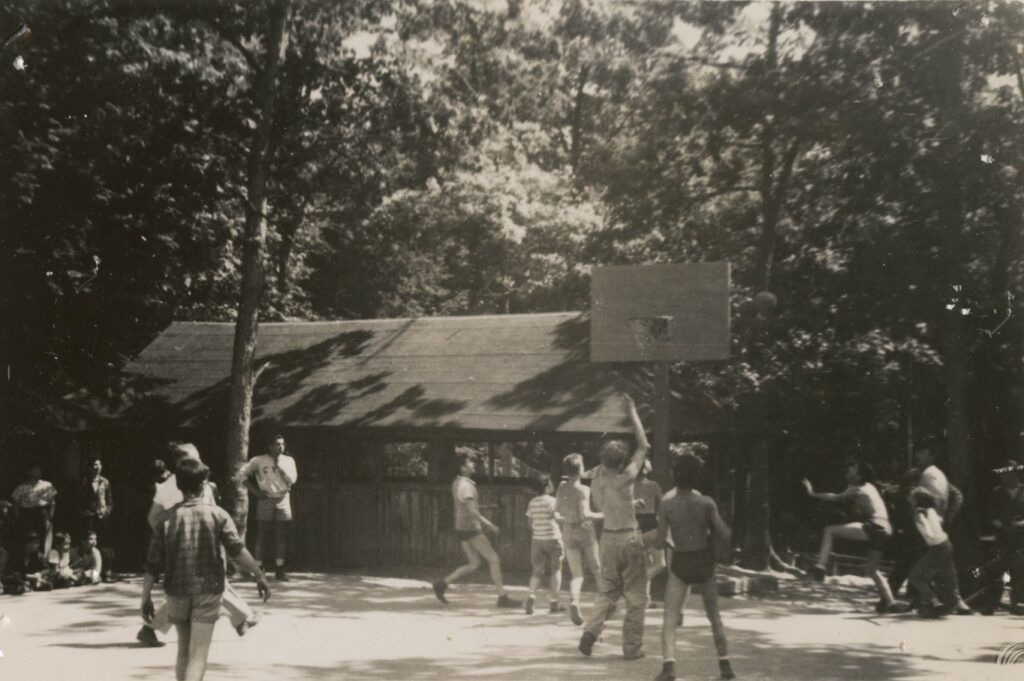
On street corners and at settlement houses and Young Men’s and Young Women’s Hebrew Associations (YMHAs), Jewish children and teens favored basketball as a fun but intensive pastime that did not require much space or equipment. The game’s invention by James Naismith in 1891 coincided with the mass immigration of Jews to America. Whereas “elite” sports like football or tennis were often limited to Protestant institutions, Jews took advantage of basketball’s easy setup. Communities used basketball to foster Jewish pride and camaraderie while also adopting an American sport. For Jewish boys and men, engaging in popular sports helped counter stereotypes that they were weak, bookish, and unathletic.
Jewish women and girls also developed a passion for basketball. Senda Berenson, a Lithuanian Jewish immigrant, became known as the “Mother of Women’s Basketball” when she published the first Basketball Guide for Women in 1901. Berenson hailed both the physical and intellectual benefits of the game. “It exercises every part of the body,” she noted, and “trains the mind to think and act quickly.” After YMHAs aided in the rapid growth of Jewish boys’ basketball teams, girls expressed interest in forming their own clubs. In 1936, The Y Journal, a newsletter of the St. Louis YMHA-YWHA, called for “feminine basketeers” to join a squad, and dozens of girls excitedly enrolled there and elsewhere.
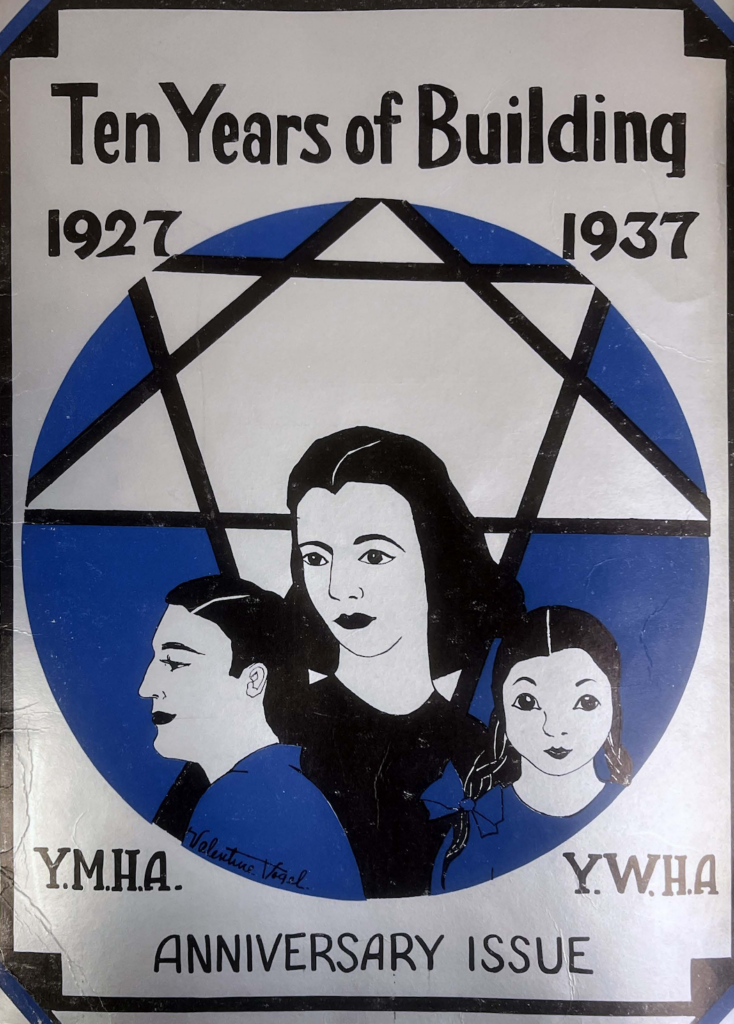
Jewish basketball leagues cherished competitiveness and skill, with game highlights often covering the front pages of local Jewish papers. In addition to celebrating success, adult facilitators also emphasized lessons of emotional regulation and teamwork. Jewish community centers published guidelines for basketball coaches reminding them to “show enthusiasm” and “stress sportsmanship.” “Occasionally you will find a poor player who, even though playing, will not receive the ball often,” read one pamphlet, reminding prospective coaches to “build up his confidence and see that his teammates pass the ball to him.”
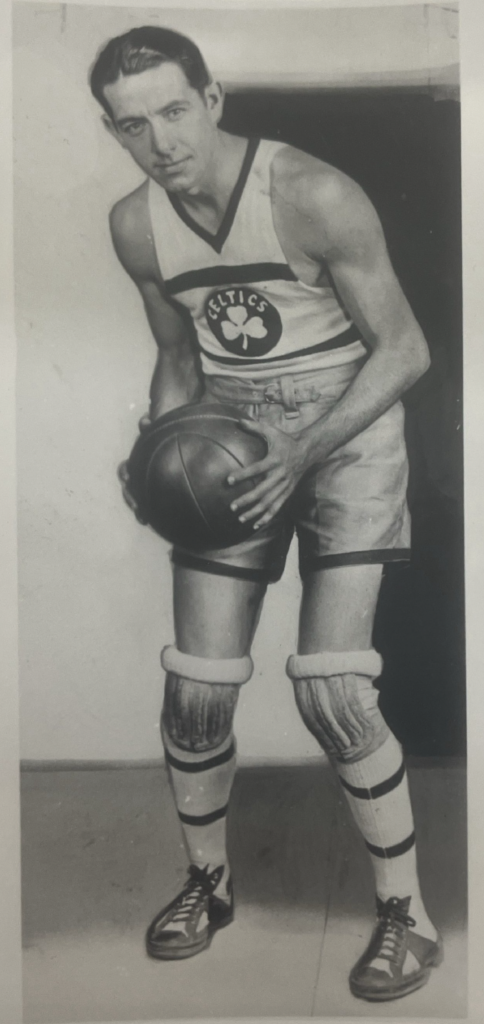
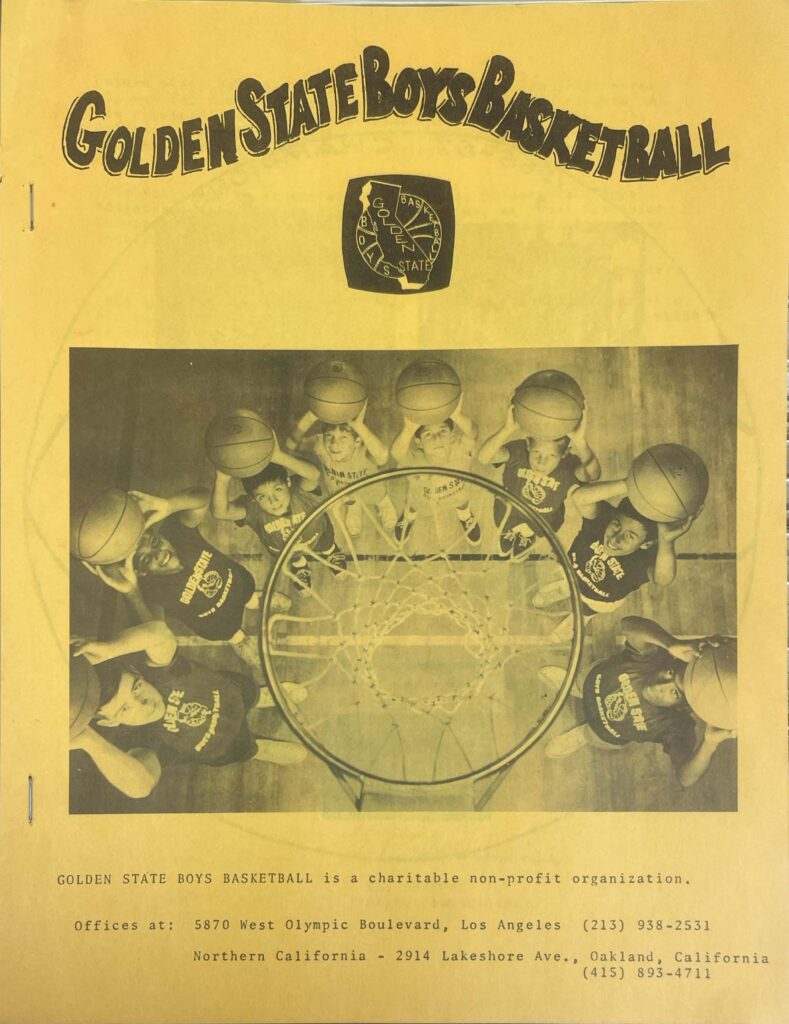
While Jewish basketball stars such as Nat Holman and Dolph Schayes thrived at the collegiate and professional levels, Jews also impacted basketball through philanthropy. In the late 1960s, former player Eli Sherman founded the Golden State Boys Basketball program to “provide kids from 10 to 14 with an opportunity to play on organized teams,” regardless of one’s financial status or physical prowess. The initiative established 50 leagues across California with over 20,000 participants. “I felt I owed something to basketball,” Sherman explained, recognizing that basketball was “more easily accessible” than any other sport. Celebrity sponsors, including John Phillips of the Mamas and the Papas, helped bring Sherman’s vision to life.
Continuing these traditions of fostering inclusion in sports, some Jews even innovated the game. Rabbi Reeve Brenner of Rockville, Maryland invented “Bankshot,” a modified version of basketball that enables disabled athletes to participate. The rabbi was inspired in 1978, when his cousin Janice Herman, a skilled basketball player, became paralyzed after a car accident. Brenner, who played point guard at Brooklyn College, imagined a new game where wheelchair players could “compete with no disadvantage.” Bankshot requires players to aim the ball at angled backboards from varying distances, taking the “running and jumping” out of the game. By the 1990s, Bankshot courts appeared at parks in 65 cities.
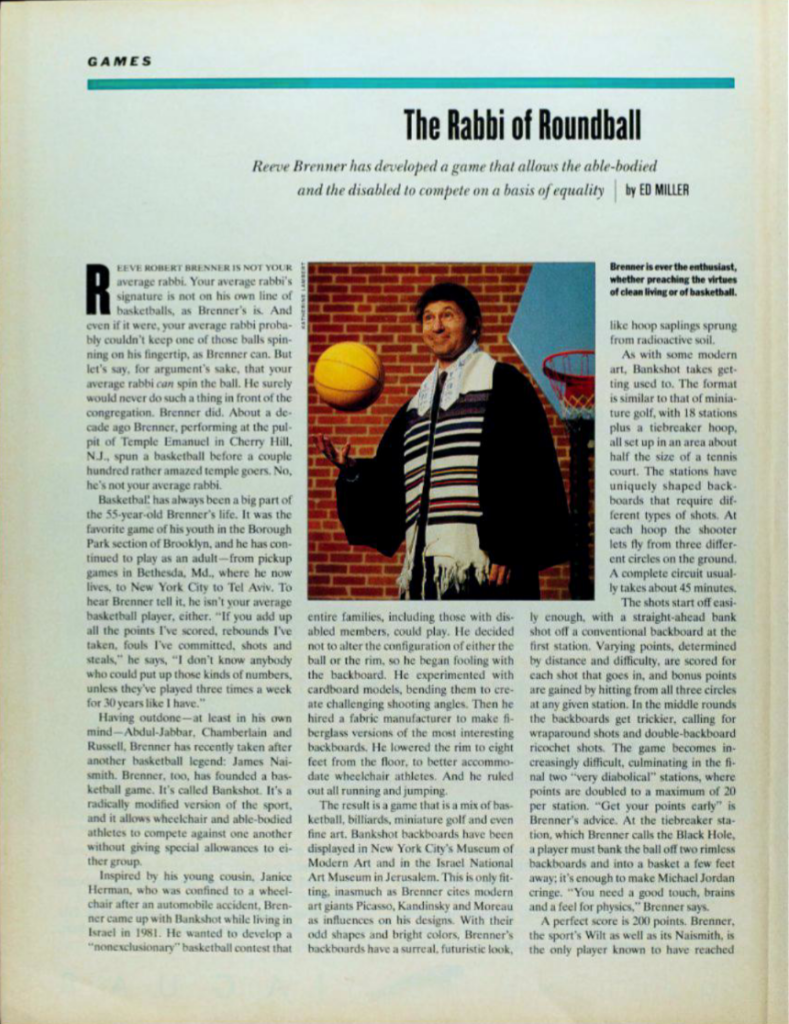
Brenner observed that “people often think of rabbis as stern or humorless,” but his engagement with basketball had allowed him to “break down stereotypes” just like Jewish hoopers of prior generations. The rabbi’s approach to sports grew out of his religious and ethical philosophies. “Communities ought to be looking to integrate people, not separate them,” he remarked. Like his predecessors, Rabbi Brenner embraced basketball not only for the thrill of the game, but its ability to serve those who might otherwise be excluded. From Ossie Schectman to Sue Bird, the Jewish history of basketball is lined with paragons of athletic achievement. But as these lesser-known figures exemplify, it is also a story of ingenuity, equality, and American belonging.