Gemma Birnbaum: All We Have Standing Between Us has been made possible thanks to generous support from the Knapp Family Foundation. Additional support provided by the Leon Levy Foundation, the Achelis and Bodman Foundation, the Atran Foundation, and Anonymous. If you enjoyed our first season, please leave us a rating on Apple or Spotify, which helps others find our series.
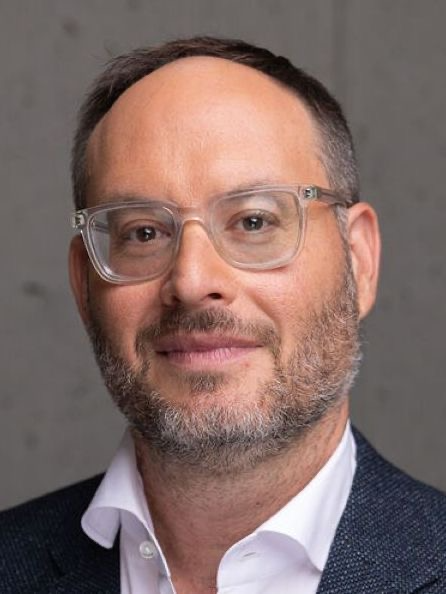
Welcome everyone to this special bonus episode of All We Have Standing Between Us. I’m Gemma R. Birnbaum, executive director of the American Jewish Historical Society. In this week’s episode, “An Antidote to Darkness,” I’m joined by two special guests and friends of AJHS. Franklin Foer is a staff writer at The Atlantic, and James Loeffler is Felix Posen Professor of Jewish History at Johns Hopkins University, and Kogod senior research fellow at the Shalom Hartman Institute of North America. Jim’s book, “Exceptional Hatred: Antisemitism and the Fight Over Free Speech in Modern America,” was released this past August.
Frank and Jim, thank you so much for joining me today.
Franklin Foer: So great to be here.
James Loeffler: A pleasure.
Gemma Birnbaum: So James, I want to start with you. You open your book with the following quote, from Supreme Court Justice Felix Frankfurter, whose words also gave us the name of this podcast. And so the quote in the beginning of your book is, “Democracy is always a beckoning goal, not a safe harbor, for freedom is an unremitting endeavor, never a final achievement.” So can you tell us just a little bit about who Frankfurter was and why you chose to open your book with this particular message?
James Loeffler: Absolutely. Frankfurter was a really interesting person. He was, of course, one of our most famous Supreme Court justices. He was one of our most famous civil libertarians.
He himself is somebody who, you could say lives the American Jewish immigrant dream, rising up, going off to Harvard as a young man, , getting mentored and tearing a path through law and all the way up through, , the world of New Deal politics and into the Supreme Court. Uh, and he’s really important too because, he was a liberal who, really felt in his bones that there was something special about the American Jewish experience and that Jews, , had a unique opportunity here to build a different kind of society, a different kind of democratic r- realization of the promise of American society.
Gemma Birnbaum: And he’s kind of not without his own contradictions, right? He’s a fascinating figure.
James Loeffler: Yeah, so Frankfurter, absolutely. He’s a fascinating figure because he is someone who is open in his Jewish identity. He’s an early Zionist leader. He’s kind of an early, convert to the cause of Zionism, and most American Jews are, aren’t really even sure what it is, let alone think it’s the solution to the, the problems of, Jewishness. and yet he’s also someone who is, uh, he’s not a religious Jew. He’s not deeply involved with communal life in that sense. And he is, Deeply dedicated to the idea that he is an American. So he, you know, is embracing his Jewishness and this national movement, but he’s deeply American. At the same time, he’s a complicated figure because he is, really willing to embrace progressive causes that he thinks are essential.
I’m talking about in the 1920s and ’30s. These are really the way you build a democracy and renew it, even unpopular causes, defending anarchists and defending, um, you know, labor causes. And yet he comes to be seen as, very conservative, even if he’s liberal, because he basically says the courts should get out of the way and let, you know, government, through legislature build new laws, um, build the state.
And, so in a lot of ways, he ends up being seen as somewhat conservative in American politics, but he sees himself as part of, the quote you mentioned at the beginning of our conversation here, dedicated to this, ongoing project of what liberalism should be.
Gemma Birnbaum: So Frank, you’re writing a new book on American Jewish history. What do you think the American Jewish story reveals about what is necessary for democracy to survive? Not just figures like Frankfurter, but others. Is there a key here?
Franklin Foer: Yeah, I think so. I think that, I mean, Frankfurter was kind of a beacon o- of sorts and Brandeis for the second generation of Eastern European Jews who kind of broke through in the years following World War II, who had a really clear sense of kind of what liberalism should be and why American was an exceptional country.
And a lot of it built on the early work that Frankfurter and Brandeis had been engaged in, kind of the first dabbling with an understanding of what American pluralism was. And I think for American Jews, this was supremely important because it was a vision of how we could become part of the country.
We become essential to its fabrics. We could kind of become prophets of where it should become. At the same time, we didn’t have to surrender all of who we were in order to take part, which is of course the essential promise of American life for American Jews, which is that there was a way that we could feel completely at home here, and we could partake of the freedoms of this country.
We could assimilate as much as we wanted to, and yet we could still be good Jewish children. We could still maintain that part of us, that kept us tethered to our family and to our people.
Gemma Birnbaum: That’s interesting. You know, the concept behind this series is it covers 250 years of American Jewish history from a different perspective. This season’s anchor this year was democracy, which is the reason for some of these questions. Is there any kind of American Jewish political tradition that you think emerges in the research that you’ve done? And both of you can answer that one.
James Loeffler: If we go back to Frankfurter for a second, I, I think there’s something you can see in his own biography, in his own sensibility, even in the contradictions I mentioned, which is kind of a symbolic representative of a tradition.
And by that I mean this, Frankfurter was acutely aware that he was an outsider, and at certain points he says, “I’m an outsider, and my politics also mark me as a red in the minds,” you know, a communist in the minds of, conservatives and certain populists. , And yet he felt a sense of at-homeness and belonging as well, and he had a confidence that America, as Frank said, was a project that he could, you know, take the reins in helping to build.
He didn’t seem to feel at any sense that he, was supposed to take a back seat, right? Or that he was a guest here. And that’s an interesting tension. I think we can see that all the way through in American Jews’ relationship to politics here, even before there’s something called liberalism.
And it has to do with Jews coming here from other countries, particularly from Europe, and saying, “Okay, we’ve entered into this and we look like Europeans. Most of us look white and we’re coded as white, and so we belong in that sense.” On other hand, this is a Christian country, and it’s a country which says it doesn’t have an official religion, and yet Christianity suffuses public life.
So there’s a tension between saying like, “We belong here, and, we are just as entitled as other people like us, to govern, to serve in the government, to serve in the judiciary, to take these roles in public life,” and yet also feeling conscious of the fact that we’re outsiders, we’re tied to another people and tradition and culture, and there’s a lot of, ways in which the society doesn’t think of us as the ideal American.
And I think about American Jewish politics… This is kind of a meta way of putting it, but I think about it as, sort of spurred creatively by that tension all the way through, the sense of like, “This is my heritage, this is my patrimony here, but I’m also, aware of being an outsider.” So when you get to the 20th century, this really gets put to the test because now you have to really figure out, okay, what is modern citizenship gonna look like?
Once we get rid of segregation, or we’re trying to get rid of segregation, we’ve gotten rid of slavery, what are we actually gonna make this society look like? And as Frank said, what is gonna be the balancing act we’re gonna do to say we express our Jewishness and our Americanness?
How are we gonna work with that tension? And I think that, behind all the other things we could talk about, you know, understandings about, civil liberties and rights, is kind of that sensibility of both belonging and yet also, marginality.
Franklin Foer: There are obviously multiple Jewish political traditions, there was this strong socialist political tradition. The contribution of American Jews to American conservatism is immense. But then if you were to look in the years following World War II, there really does become something approaching a shul politics for American Jewry, that there is this tremendous consensus in New Deal liberalism, and it’s like, you know, I think that it’s an idea that American Jews did so much to co-author. And, yes, again, especially in the years following World War II. And I think so much of it is based on not just reactions to, this country and, the, the potential splendors that it offered as well as the complexities. It’s also then after World War II, I think relates to, even more explicitly to, to kind of Old World fears that have always manifested themselves in American political thinking.
But, you know, I’m just thinking about how in the 1950s , you had these people generating ideas. Richard Hofstadter, and Louis Hart, and Daniel Bell who were historians, and academics, sociologists developing kind of a new idea about what it was that made America, an exceptional nation.
And the search to look for the things that kind of supplied us with a consensus here as opposed to, a really confrontational polarized politics. That part of the appeal of the New Deal order to American Jews was not just that it expanded opportunity for groups, not just that it allowed for, Jews to move to Washington and take jobs in the public service, but that it would produce an order that would be stable, and it would result in, , an element of social order for American Jewry.
The hostility to populism that is so much a part of, where American Jews come at this in the 1950s, whether it’s the studies, in authoritarian personality that the American Jewish Committee commissions, or whether it is, the works of Hofstadter, and Bell, et cetera, , and the partisan review set, which is kind of really hostile to, to populism.
I do think that there is this sense that we can expand freedom, And I do think that freedom is a key word for the American Jewish political tradition. We can expand freedom, but we’re not gonna do it in a chaotic sort of way that potentially upends American Jewish life.
It tends to be a really, like a reform rather than a revolutionary tradition after World War II.
James Loeffler: You know, I wanna pick up on something Frank said, and maybe push back too.
Franklin Foer: Yeah.
James Loeffler: About the, you know, this question about how fortunate American Jews feel, and their gravitations towards stability and things like that.
Another name we could throw into the hopper for that period is David Riesman. And David Riesman’s a disciple of Felix Frankfurter. He’s an important sociologist, and he writes about basically democracy and also even alienation in American society, the lonely crowd. But David Riesman also makes a comment in which he says that, one of the, for better and actually for worse, things that defines American Jews is, this sense that, they have escaped the terrible story of Europe. They’ve escaped the violence and antisemitism, and that whatever they’ve experienced here isn’t the same, and they’ve escaped the Holocaust. And so he kind of suggests there’s a lot of guilt that flows through that, and even some kind of, dark nightmares, you know, that American Jews are always saying, “We’re so safe here. We’re so safe here.” And Riesman will go on to say they sometimes, overplay that and overplay their fears that it could happen here too. So what I mean by all this is basically, the exceptionalism is not just ’cause Jews see a chance to build something here or to get it right and avoid the dangers of Europe.
It’s also that they feel kind of like, we dodged a bullet really, right? We’ve dodged a bullet here, and so, , our starting point is one in which we’re just already better off. In my book I quote Sigmund Livingston, who’s the founder of the Anti-Defamation League, who writes, in the late 1920s, I believe, and he basically says, “America never had antisemitism.”
Now, he knows that’s not true, but he’s so attached to this idea that we have to make sure America is different, and we have to tell ourselves and Americans how grateful we are to be here, because we’re always comparing this to what happened over there, to our cousins, to our family, and so on and so forth.
Franklin Foer: Can I add just one thing to amend what I said further? That’s super fascinating about the willful optimism that- goes into Jewish American exceptionalism, and how it actually isn’t just channeling kind of dreams, it’s also channeling nightmares.
But the other thing that I, I think that’s an important strain of post-war American Jewry, of course, is that you have this second generation that comes and is able to live the lives that their immigrant parents’ desire for them, and there’s kind of an emptiness there. That there’s kind of-the, the shallow materialism of American consumer existence isn’t quite enough, and that there’s this sense that things have been lost along the way, That ends up producing, I think, this very energetic search for meaning that is a very important part of- the late 20th century or the, the mid-century, Jewish American experience.
It’s what produces the likes of Betty Friedan and, the kids who hop on the buses that go down to, to Mississippi, it courses through the novels, J.D. Salinger, who’s the grandson of Rabbi, or the Philip Roth novels. And there’s this sense that we, we should also want more than just to live in this country, to buy its vacuum cleaners, to lounge in our swimming pools, and that there was a cost to fitting in. And they articulated that cost maybe differently than other American Jews who were connected to… Than, say, Abraham Joshua Heschel would’ve e- expressed that. But I think that there is a similar sentiment there that drives, American Jewish political tradition.
James Loeffler: Mm.
Gemma Birnbaum: So the idea of the United States as this kind of exceptional refuge, the idea of American exceptionalism in this context is that- is that even real? Is it something that’s changed over generations?
James Loeffler: So I’ll take this one to start. I think that is more romantic myth than reality, and it’s not because American Jews and, you know, my ancestors, found refuge here. They did. But the thing I think it’s forgotten, is sort of two pieces of the puzzle.
One is something, that’s gonna be important for talking about the political issues, which is economics, You know, who are these people who come, and what is it that they are plugging into? But the second is also how many people come and when. So I think it’s often forgotten there are so few Jews in America before the 1880s, right?
So we talk about George Washington, and, you know, AJHS is built out of commemorating the Jewish past back into the colonial, you know, period. And that’s an important story, and Jews play roles in that story, but there’s so few of us that we’re never a problem or an issue the way we are, in Europe, right?
And the way as modern antisemitism is mounting and people are trying to define what is, a modern society, whether, you know, it’s a republic or a revolutionary model. It’s not till the 1880s, and that’s when we start coming. And surprise, surprise, that’s when suddenly we begin to have to work through these issues as America as a whole has to do in the ways that Frank’s talking about, right?
Pluralism, like w- what is citizenship gonna mean? How’s the economy gonna, uh, reflect this? What are political parties gonna be? So the earlier period, is a period of refuge in a sense, but it’s not, it’s not really tested, I would say, in the way it is afterwards. And with that comes this other issue, which is, I think we tend to use the word refuge because we say, “Well, we’re fleeing the bad stuff, the pogroms. We’re fleeing the Holocaust,” right? Everybody is fleeing a Cossack. We now know that’s not really true, right? And we know that there’s Cossacks and violence over there, but most American Jews are coming here for the same reason that most other Europeans are coming, which is economic opportunity.
The e- economy’s collapsing in Europe, and this agricultural world of serfs and peasants, it’s all collapsing. And so Jews are moving here because this economy is growing. That is the reason, of course, that they’ll also get drawn into the labor movement, drawn into the question about, you know, what we want the state to do when, it handles, the economy, because they’re on the front lines of that ’cause they’re economic migrants.
So again, it’s not that we don’t benefit in enormous ways from the freedom of the country, but I think we miss the fact that we’re kind of part of this incredible change of a society reinventing itself through migration And the Jews are swept along with it. We’re, you know, we are restless and exuberant, and so therefore we tell stories to America.
And as Frank can tell us, we become the paradigm also of what an immigrant looks like, right? Already before World War II in some important ways, but then afterwards when it’s these great authors who are now memorializing the world of their, you know, parents and their childhoods, and critiquing it and making fun of it.
But in a way, obscuring, I think, how much this is a dramatic story in which we, like everyone else who arrived here, had to figure out, if you move for work, what kind of society is this and how much are you trying to just plug yourself in versus reshape the society?
Franklin Foer: Yeah, I mean, of course I’m always struck by how, there’s so few incidents of American Jews migrating back to the old world. The bet on America was kind of an all-in bet on America. Yes. So it was kind of too big to fail, in the Jewish imagination.
And also the bet on public schools, which was a bet on acculturation, which other immigrant groups didn’t make, and I think that was hugely important. So when it comes to this question of, I mean, just back to the question about have we romanticized American sanctuary- Mm … I mean, I think there’s also a lot of recency bias there because you know, the world that Jim and I grew up in really didn’t have measurable a- antisemitism.
We didn’t suffer antisemitism in the schoolyard or in our search for jobs. In fact, it was a world that was kind of filled with people who occupied the sorts of positions that we would want to hold. It felt like, like a dreamland. But if we went back a generation further, I, I don’t actually think my parents suffered very much antisemitism.
But I think that, I’m always struck just by how much antisemitism there was during World War II itself when our country was off fighting Nazis and that we were allowing kind of proto-Nazis to fester on our own shores, and how much our employment laws still, permitted it.
I think that the thing that I’ve learned a lot from reading Jim’s work is the extent to which, American Jews took on the problem of antisemitism head-on after World War II. That there was an active attempt to remake American society, to expunge it. That the antisemitism faded for reasons that were external to things that Jews did.
But there was also, there was also, a real commitment, and it’s, and it’s very much tied into the liberalism that we’re talking about and the kind of the American exceptionalism that we’re talking about, to undo the exclusionary parts of our legal system- Mm … to really knock down employment discrimination, housing discrimination, the quotas at the universities, and that was a story also of Jewish agency.
James Loeffler: Mm-hmm. Yeah. Agency, and I mean, I’m not gonna disagree with you citing stuff I’ve written about. I agree with you about, – this, this period of the ’40s and ’50s. And just to tie it back to this kind of refuge question, I think what is striking is, , as you said, Americans are ready to go to war against Nazis.
Americans in some ways all become anti-fascists because they see this as, you know, an ultimate enemy and evil over there. But that doesn’t mean they wanna open the gates to Jewish refugees, and it doesn’t mean that they wanna let in Jews after the war, right? And , it’s striking. One of the things I’ve learned , in researching , this story, um, is striking to see people who will say, “The Nazis are terrible.”
They’ll maybe even say, “antisemitism is… I wouldn’t wanna discriminate against a man because of his background, but I don’t want more of those Jews coming in.” Right? And so in one sense, of all the things we’ve just mentioned that were the, willful victories of, you know, fighting to end discrimination, and doing it in a way that benefited Jews and others, the great, perhaps the greatest Jewish, uh, political loss after World War II was just that we couldn’t keep the doors open, right, or, or reopen them.
There are people whose ancestors were able to come through, right? We know that. Displaced persons, and others. But generally, and this was the great fight really in the late ’40s, early ’50s, where some of the people who had been working on, civil rights turned around and said, “You know, we’re mostly… We’re, we’re most concerned about what Congress is doing with migration now, that it’s gonna keep out people on grounds of, you know, anti-communist reasons. “It’s gonna bar us.” And we didn’t win that fight. So that’s an interesting wrinkle to the story, I think, again, about kind of the sanctuary, um, especially for those people that we know so many families were, were divided by the war and were, trying to figure out how, what it meant to reunite on these shores.
Gemma Birnbaum: So this is interesting because now we’re gonna talk about antisemitism, but we’ve already started, right?
James Loeffler: Funny how that happens.
Gemma Birnbaum: Funny how that happens. So my first question is, like, is the relationship between antisemitism and American democracy intrinsically linked? What does it say about a society that has an antisemitism problem and the health of their democracy? And, you know, our series was not supposed to be about antisemitism, and it’s in seven out of the eight episodes, and probably could’ve been in all eight if I had gone a different direction, right? Mm-hmm. So what does that say about the American Jewish experience that we both strive to, both as people who tell history and as people who have to live in this country or want to live in this country, what does it say about the experience of American Jews that we sort of can’t even separate it even when we try?
James Loeffler: Hmm. I guess we should ask the Golden Age author.
Franklin Foer: Yeah. I mean, I think that, i-i-in the, the Jewish political tradition that we’re talking about, in the optimistic part of it that we’ve just described, is this sense that, we were kinda steeped in the ever-expanding circle f-of freedom sort of view of American democracy from, from a pretty early part of that rhetoric becoming kind of a chief cliché staple of liberalism.
Is it possible to have a genuine democracy when, when antisemitism is, is flourishing? I think it’s a sign of a certain weakness in civil society when antisemitism flourishes. It means that there’s a high degree of distrust. It means that conspiracy theories are tending to take hold.
I-it’s hard to imagine expanding, the reach of a democracy when antisemitism is flourishing, because it usually means that, kinda more broadly there is xenophobia in the air. It means the sorts of, consensus-type conditions that would exist, would become a pre-prerequisite for expanding democracy are non-existent.
And I do think that this current surge that we’ve all experiencing has to do with, um… does very much correlate with, a sense of broader disappointment in American democracy, that it correlates with a loss of trust, a loss of faith in our institutions, roundly. And so when one does not have faith in institutions, one does tend to, those institutions become susceptible to theories that, that say that hidden hands are manipulating them, and I think that that, that very much is where we’re at.
James Loeffler: Yeah. I, I just pick up on that and say, you know, antisemitism is many things, different forms of it, but one consistent theme is kind of an anti-elitism, right?
A conspiracy theory about power and elites. And so along with mistrust in institutions, it’s the idea of, that the hidden hand is, is a hidden band right? That, of people who are, , rogue actors, right? There’s a tradition of that in American society. There is a debate, we should say this is a history podcast, a debate among historians about whether or not populism, this goes back to great Alan Brinkley’s work, right?
Whether American populism in, in its early 20th century form was actually anti-Semitic or not, you know. But bottom line, You know, antisemitism punches above its weight class, because it has to do with certain theories about power and mistrust in society.
Our biggest challenge, however, is, as you said, Gemma, to kind of, like, right-size it, to figure out what is its actual proportion in society, and where does it relate to other hatreds and other things going on. And that’s very challenging, partly because, as Frank said, recency bias, right? So, like, if we’re living through it, we want to look back and suddenly find it everywhere, right?
But also because it’s so distinctive ’cause of its connection to conspiracy theories and power, you know, myths and things like that, that it’s sometimes harder for us to figure out, okay, well, how does this relate to xenophobia as a whole? We know it does, but then somehow we always end up talking about, you know, this corner of it.
So my take on this basically is to say, it has to be recognized for what it is, but we always wanna be looking at it in relationship to why it’s flaring in society at different times, right? What’s causing it? What’s driving it? Why people turn to it to explain things, in this moment in time.
Franklin Foer: In the arc of the story that we’re talking about, one thing that makes it especially poignant is that to some extent, we’re also victims of our own success, that the fact that America was so welcoming it did provide this incredible canvas for the American Jewish experience, and that we were so successful here means that we are, we’re very well-represented in the sorts of elites that are the subjects of populism and that become central to antisemitic narratives.
James Loeffler: Mm-hmm. Mm-hmm. Or we were, Frank.
Franklin Foer: Or we were.
James Loeffler: I don’t know. That’s our debate- Yeah … about also,, how much, how much decline in these, options for mobility and, you know, Jewish success, if you will.
Yeah. Yeah. No, I think that’s absolutely true, though. I’m a little bit resistant to this idea of the kind of, like, just the canary in the coal mine, you know? And you hear this, you hear versions of this in different parts of the Jewish political spectrum today, which is like, you know, what happens to the Jews happens to everybody.
Well, not always. Or, you know, when people are demonizing Jews, it means the society is going to decline. I don’t think so. I think it’s more what we’re suggesting, which is that happens when a society enters a period of crisis, then it’s looking for its scapegoats, it’s looking s- for its myths, and these things concentrate on the Jews.
So you still need to respond to it, but I think recognizing it, as a symptom of deeper issues rather than something which is a predictor of what is to come can be helpful for us if we’re trying to learn from history, so to speak.
Franklin Foer: Well, I, I also, I do think it probably is a leading indicator of democratic decline and of other deeper social problems, and that, , just in terms of explaining why antisemitism matters to the wider world, I think that that not only is true, but I think it’s- it’s maybe likely to be one of the more persuasive arguments that one could make for, why somebody who’s not Jewish should care.
James Loeffler: I won’t disagree with that. Uh, but I, I guess it’s a little bit of a chicken and egg, what’s coming first. What I do think we risk, by saying, “You should care about this ’cause otherwise you won’t see democracies in decline.”
I kinda think about it as in terms of what we’ve discussed in the rest of this conversation. It can make us passive. Just know how bad this is, so you’re kind of, you know, batten down the hatches and, like, reinforce institutions. And if we go back to that opening quote that, uh, Gemma brought us from Frankfurter, I do think the great American Jewish political tradition, or the version of it we’re talking about now, was one which was, , concerned about these kinds of issues to be sure, but still forward-looking.
Yeah. Basically saying, “Okay, what is our optimistic view of where we’re gonna go?” Not only, what do we fear. We fear authoritarianism always, right? In the 20th century and, and now in the 21st. But what is our vision of where we’re gonna go? And let’s tell America, for instance, even if I personally disagree with it, let’s tell America about religious pluralism and that we’re a melting pot based on faiths in the ’50s, right?
That concealed a lot of things, but that allowed Americans to think positively about themselves as a society, right? And that’s our challenge, I think, when we’re talking about antisemitism and democracy. Certainly, it’s a leading indicator, but, uh, we sometimes can sort of lapse into focusing on the indicator as, like, the blinking light rather than as the question mark that should kind of, like, gird and inspire our political imagination.
Franklin Foer: One thing that I, I don’t want to, hijack the conversation here, but I do think that th- one of the things I find very distressing about the present moment as it relates to this American Jewish political tradition is that there is, there’s an abandonment of it that’s- Hmm … that’s in, in process.
That, and I think it relates to antisemitism, that antisemitism is such a deep Jewish fear, understandably, justifiably, and that as it has reemerged, I think it’s basically short-circuited a lot of our strategic mechanisms, and that,, we’re just not thinking strategically. We’re thinking fearfully.
Mm-hmm. And I think what is kind of glorious and encouraging and inspiring about the political tradition that we’ve been talking about is that it was able to see past the fear to, and maybe, maybe a bit willfully, uh, create kind of an optimistic agenda, platform, rhetoric for why, , in the face of threats potentially to Jews, we needed to embrace a politics that could speak to a broader population, that had a vision of freedom that, that kind of avoided darkness, that was an antidote to darkness. And it allowed Jews to form, , political co-coalitions that were, you know, pretty lasting and stable and served Jewish purposes pretty well.
James Loeffler: Yeah. Yeah. Well said.
Gemma Birnbaum: You know, my next question, which I almost don’t even wanna ask, is it even possible to talk about the history of Jews in America without discussing antisemitism?
But I think i- instead of answering that, I’d say like, as you, as you’ve both done research, what were things that you found that were surprising and exciting about American Jews? We have this huge archive that has 30 million pieces of paper and objects and artifacts.
What’s the joy in some of it? ‘Cause we have to find that a little bit, too.
James Loeffler: Absolutely. , I mean, for me, the joy was how much creativity there was, how much debate, not about… You know, Jews have always debated, you know, what’s wrong with the world, what’s happening to us.
But I- in keeping with this theme I just mentioned as sort of forward-looking, when you look through the – AJHS archives, it’s amazing the number of organizations that started and the number of conventions and meetings and congresses, , and local chapters that got together, and they issued their own statements.
And they weren’t just statements about, you know, “We denounce this speaker in the news,” and, “We denounce this,” or, “We’re fearful of that.” They were, , positive democracy language-infused statements about what the future looks like, right? And to me, that was exciting because it really meant, , it wasn’t just that American Jews, even as they’re moving into middle class, you know, opened up their checkbooks, you know, and engaged in philanthropy or civic-minded organization, and they were joiners.
That’s part of it. But it’s also that they were, , they were in love with ideas, right? And they believed that they had the space to think about ideas. Now, that’s a Jewish phenomenon that goes back to Eastern Europe. It goes back to the quest for kind of, you know, building a new world.
There’s a revolutionary version of that. There’s a Zionist version of that, and there’s kind of an American liberal version of that. But that was really powerful because, that’s our tradition, too, right? And then, and there’s something in there that is exciting, actually, because , it’s not just what I think so many of us are, are jaded about, which is this endless cycle of, you know, kind of pro forma denunciations, of objectively bad things, and other things that, as Frank said, are kind of born out of a spirit of just pessimism. But people were… wanted to talk about , what should the economy look like?
You know, what should civil rights look like? What should free speech look like? And that stuff in the archives is our heritage, which should, I think, serve us well to imagine what we could do in our own conversations.
Franklin Foer: Yeah, I think about, David Sorkin’s concept of the second emancipation, and, You know, there are people who would contest that as they contest every- But the idea that in the 1950s, that there was this experience of Jewish freedom, and, and just how exhilarating that experience was, how much, as Jim said, how much creativity and cultural, ferment flew from that emancipation.
How, American Jews really were able to create something that felt civilizational here, not just in terms of American Jewry, but in terms of what we were able to contribute to the nation. And just how many different directions that emanated out from, , you know, that you could have the likes of, of the Dylans of the world who were trying to become kind of omni-Americans and they felt like they were inhabiting just this sui generis American tradition you know, he was a man who came from nowhere, right? And then you have the likes of Leonard Bernstein, who was very much channeling an American Jewish tradition , in his music. That you had, , this kind of the glorious collection of writers that we talked about, who felt like they were finally able to, achieve an unalienated voice that somehow expressed something deep about themselves, that they weren’t having to perform in the style of European modernism.
That they were creating a new type of American literature that had sometimes a Yiddish inflection, but that was, that was very much themselves. And, I think That was just a, an incredibly exhilarating contribution to this society and to this country that, , that wasn’t at all parochial.
That really, reverberated, from coast to coast.
James Loeffler: Yeah. I’m gonna throw in one more thing since why not focus on, on Jewish joy, as you’re suggesting, Gemma. I have been struck, and this is one of the things that we can sometimes only do with the archives, by what, roles were played by Jewish women in the early civil rights movement, and how aware they were that they’re fighting a double game, right?
They’re fighting a, a game for equality in, you know, male-dominated spaces, and they’re fighting a kind of … It’s a new era in Jewish history, where they’re in a society where they can push for equality. But they’re also pushing for Jewish equality. And I was struck , by that. Some of the people I researched, , helped invent, some basic ideas such as, you know, the idea of using jazz music to promote civil rights, culture and, you know, tolerance campaigns, and, even African American history weeks and these ideas of using education.
And that again was the creativity, right? They weren’t, you know, there were many women like that. There were many more who were, moving into a middle class existence and were not traveling along those paths. And many who would have to wait another generation really to kind of unleash their talents because of sexism in the Jewish community.
But there was a way in which, there was, , a self-empowerment, right? And there’s versions of that, again, before in the labor movement and elsewhere, but there’s something about this, this liberal tradition. , And there’s some people in it that I found really compelling because they basically were inventors, right?
And that’s kind of what is so striking today. They weren’t just influencers, right? They weren’t just people who by virtue of their dedication and their station in life and their wealth decided, “What can I do?” They’re people who simply said, “I’m going to invent something.” So I think that’s a positive, legacy as well that you get when you go into the deep past.
Gemma Birnbaum: Frank, anything to add to that?
Franklin Foer: Yeah, I was just thinking, When my, my piece about The Golden Age of American Judaism’s ending came out, there was a critique that came from certain rabbis that the golden age of American, Jewry was not a golden age for American Judaism, that, um, what I was talking about was a world that had a measure of assimilation built into it, and it certainly wasn’t a very religious world.
And I think that there’s a lot of truth to that, but I also think that one of the incredible things about American freedom is that, American Judaism itself has been exposed to kind of the porousness and the innovation that comes with being an American religion, and that there have been so many different denominations that have spun out, from American Judaism, that when You know, when I go to shul, I see all the ways in which, there’s, there’s kind of subtle borrowing from America that I think has actually enhanced Jewish life here.
Um, and certainly you have things like, you know, modern Orthodoxy, conservative Judaism. I mean, Chabad is something that kind of is like an only in America type of story once it, once it takes place as Reform and Conservative Judaism kind of struggle to kind of keep, keep people in, in their seats, I think that they are kind of involved in an endless quest to borrow from the suburban megachurch and from the Black church and from all these other traditions.
And, I don’t know. I think that, that American story itself is a story about freedom. It’s about kind of some of the costs to freedom, perhaps, as it, as it relates to, losing people to assimilation, but it’s also a story about how it produces incredible creativity.
James Loeffler: Yeah, I, I’d just add to that, I mean, as long as I’ve been studying American Jewish history, I’ve been reading, you know, books and statements by rabbis saying, you know, “What’s, what’s going on with the people? They don’t respect tradition anymore,” right? This was said in the late 19th century as immigrants began to come in large numbers, right?
Rabbis complaining, “Here, all they want to do is work or have leisure. They might like to learn lectures about Judaism, but they don’t practice it,” right? So this is a perennial problem. Things vary over… There are different patterns to be sure. But I’m less, convinced that that is something which is just like, you know, a colossal, a failure of a certain period of history as opposed to a cyclical problem that, that has to do with Jews saying, “Yeah, the freedom here also means the freedom to not be religious, or to belong to the synagogue, but not to show up,” right?
And that, that is part of it. And it’s an interesting thing to think about in our moment where many American Jews are trying to figure out what religion can play in their lives given trauma, given fears, you know, given these challenges we’re, we’re talking about. But it’s, I don’t think that should be used to disprove the moments of, you know, real potential and freedom and success.
Gemma Birnbaum: It’s interesting because I grew up in Forest Hills, Queens, which is especially in the moment when I grew up in the ’80s and ’90s, a very Jewish place. And so I took so much for granted, and then I moved away. Hmm. And then I moved to the Deep South. Mm-hmm. And even though I was in places like New Orleans, I was also in a very small town in Arkansas where I was… It was just me and a woman named Caroline. We were the, we were the- … Jews in this town.
Franklin Foer: Caroline Birnbaum? I know her.
Gemma Birnbaum: She’s the best. It’s, it’s just the two of us just making it work in Perryville, Arkansas. And so there’s this idea that, I, I like the idea that there are so many different ways to be Jewish, and that, that is reflected in the archive, that there isn’t any really one way.
Because I took so much of it for granted because I was surrounded by Judaism and Jewish people that I didn’t have to think about it until I was kind of put in these situations where suddenly I was maybe not… You know, we were never necessarily, as Jews in Forest Hills the majority, but it was a significant population, where suddenly it was quite literally me and a couple of other people.
Mm-hmm. And so, last kind of question to think about and to answer is, how can American Jewish history serve as a kind of, not necessarily an inspiration, but almost like a grounding force for some of the challenges that both American Jews and also anybody, is experiencing today?
James Loeffler: Well, I’m tempted to go back to the golden age question, right?
I’m not a big fan of golden ages, ’cause there’s always more going on. But I think in a way that, what, what Frank’s writing allows us to see is both that, there are periods of terrific optimism, and even in those periods of optimism, the political currents under the surface are still currents which bring conflict, right?
What I mean by that specifically is, that if you look back at the mid-century, and you look at this moment of second emancipation, as the historian David Sorkin called it, and a moment of just civil rights working well for the Jews, and Jews claiming rights, building rights, there were still arguments and debates about, the left, about communism versus anti-communism and the Jewish you know, so many of these great intellectuals and writers we’re talking about were obsessed with that debate.
Th- Black Jewish tensions were, were real, even though there was a terrific partnership. And both could coexist, right? So we’re certainly in a very difficult spot. That was a better time. But we could see even in the good times that there are these hard choices, and people were looking around and saying, “What are the terms of partnership?”
Right? “What are we gonna do if we don’t agree about X member of the community who still has a l- huge following in your, in your community’s, audience for this person?” That kind of thing. “What are we gonna do about, ideological, whether we want ideological red lines, especially when the government is, making these authoritarian-like moves?
What are we gonna do about that?” So when I look back on that, I see it’s not like we just had it figured out. We were figuring it out, and we were benefiting also from certain opportunities about what America looked like and, and what had unified it. But seeing both the conflict and the success together, I think can help us avoid something that I think Frank shares with me is like one of the greatest threats, which is just like this Judeo pessimism that simply says, ” we’re so screwed that we can’t even think about what our strategy should be,” because what strategy you mean when you’re screwed?
Um- Yeah. And that’s how I’d take it.
Franklin Foer: Yeah, I think that, there’s a sense of inauthenticity that sometimes haunts American Jewry, you know, it’s the relationship to Israel, and it’s like that, that Israel somehow becomes something that’s more authentic than the American Jewish experience.
Or that, we’re not living in Fiddler on the Roof, and therefore There’s something inauthentic about, what American Jews were able to create here. And I do think that at this moment, where it feels like a lot is on the line for American Jewry, the history, the fact that there is an American Jewish tradition that there is an American Jewish civilization that, all of the optimism that kind of our ancestors felt about America, which may have been a willful optimism, and may have required suppression of certain nightmares, was, so much better than the alternative because it’s what Jim describes.
It allows for the basis for political action. It allows us to kind of appreciate what we have here, which is, the greatest community in the history of the diaspora. I mean, that’s just , an objective statement. I mean, there’s a reason why diasporas have emptied out in most countries, and that American Jews when offered the opportunity to leave simply, like it here. Because there’s so much that this country has given to us as a people. It’s not perfect. We all know the imperfections. It’s like, and historians like to focus on the imperfections, that’s very- That’s- No, it’s true.
It’s, it’s a useful- Yeah. It’s a really useful- No, it’s part of our job. It’s part of our job. Yeah. It’s, it’s, it’s a, it’s an extremely important intellectual responsibility to focus on the imperfections. But I think, the imperfections should never let us crowd out the grander narrative, the deeper truth.
And, that is, we have something really important to fight for here.
James Loeffler: Well said. Well said. I like what we’ve come up with, with willful optimism, but I think it’s still, it’s still optimism. And I think the archive in history is, it, it should embolden us.
It should give us, you know, comfort and it should embolden us, about the distinctiveness and about the possibilities that were achieved and the possibilities we helped create. So absolutely. It’s kind of, I think the wrong way to take the historical critique of the past is to say, “You thought it was good, but it was bad.”
Right? I think the correct way is to say, “You thought it was good. Well, it was good because people made it good, and they got lucky.” And other things were happening, and they realized how that would benefit the cause of equality or freedom, right? So, they made choices, but the point is, they, they made choices and commitments.
So I, I do think that’s what the history is really powerful for, for us, and I do think that, even as we now, in this moment, are naturally looking back on, and I’ve just wrote a book about it, antisemitism, right? Um, the dark corners and the continuities of hatred. Uh, the point is that that didn’t prevent people from thinking about the kind of positive change they wanted to see.
So again, I’ll go back, now is the, the second time I’m doing this, but the Frankfurter quote really speaks for, I think, what we need to be doing, which is view democracy not as a safe harbor, right, as an achievement, but something that has to be built and rebuilt a- and expanded upon. And it…
As Frank’s saying, it was built in a really distinctive, unique way here for American Jews and for Americans. So that is our charge, really, is to think what can history can do to kind of keep us moving forward.
Franklin Foer: Well, I think, at its best, what, history does is it also helps us maintain multiple truths at the same time.
Yeah. Which is something that a lot of our society now has trained us to resist doing, that, that there was optimism, and it was fueled by nightmares, and it, and it- Yeah, yeah … all the things that you’re describing that are in- Yeah … tension with one another are all true. And being able to think that sort of way is also a, a necessary… It’s almost a necessary precondition for imagining a better future.
James Loeffler: Yeah. No, absolutely. I mean, we’re on an archival podcast. That does take us back to the archive, ’cause that’s the beauty of the archive, is it shows us all the stuff. And then you have to interpret it, but you have to see this contradicts this.
And I find, we’ve changed how we teach, right? We teach our past, too, which is to say, we used to rely on textbooks that simply told us the story, you know? And then we moved a little bit more towards, “Well, imagine yourself in the story.” But now I think in many levels of education, we’re basically saying, “Well, here are the raw guts,” and they’re so interesting, these multiple stories.
You still have to synthesize them, but you can see a- all of it there, and then you have to figure out why this won out as a thing, or why we remember it this way. So yeah, absolutely, that having those, having the multiple truths there is really, a good thing for democracy, and it’s a very Jewish thing as well.
Gemma Birnbaum: Thank you so, so much for doing this.
James Loeffler: It was awesome. So fun to do this.
Franklin Foer: Excellent. Thank you, Gemma. Thank you. Talk to you both soon. Good to see you, Jim.
Gemma Birnbaum: My thanks to Franklin Foer and James Loeffler, and to Laura Liebman, Adam Jortner, Shari Rabin, Adam Mendelsohn, Esther Shore, Daniel Sawyer, Deborah Dash Moore, Tony Michaels, Britt Tevis, Andrew Sperling, Ronnie Grinberg, Daniel Schwartz, Steve Israel, Gavriel Rosenfeld, and Pamela Nadell for contributing to our first season.
Join us in 2027 for an all-new season of All We Have Standing Between Us, and don’t forget to give us a rating on your preferred podcast platform. This episode was recorded in the AJHS Digital Studio and was made possible thanks to the American Jewish Education Program, supported by Sid and Ruth Lapidus.
It was produced by me, Rebeca Miller, and Andrew Sperling. For additional show notes and a transcript of this episode, visit ajhs.org/democracy.