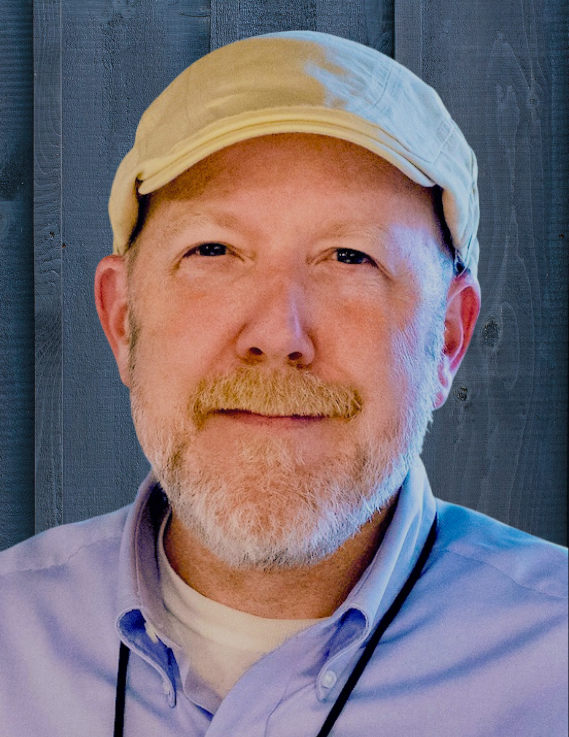
Megan Scauri, AJHS: The World in Front of Me is presented by Jay and Gretchen Stein, with generous support from the Knapp Family Foundation, the Philip and Muriel Berman Foundation in Honor of Alan Bloch, Scott and Dianne Einhorn, The Karetsky Family, and Michael Koss.
In NYC? Visit the companion exhibition on view at the Center for Jewish History, now through May 2026.
Bill Aron: Shalom, y’all.
Ruth Ellenson: Listen, for a boy from Philly, that’s pretty solid—southern accent. (Bill laughs)
Host Ruth Ellenson: That’s Bill Aron, prolific photographer of Jewish life. I’m your host, writer Ruth Andrew Ellenson. I was fortunate to grow up being photographed by Bill, and welcomed the opportunity as an adult and a journalist to explore the legacy of his work, and the context in which it was created. Over the course of our series, we’ll travel with Bill across five decades, and hear his stories about documenting Jewish communities around the world.
From The American Jewish Historical Society, welcome to The World In Front of Me with Bill Aron. This is episode 4: The American South.
In the early 1990’s, Bill began what would become an almost decade-long project documenting Jewish life in the American South. The result was a book called Shalom, Y’all: Images of Jewish Life in the American South, which was published in 2002, and an exhibit that was on view at institutions like the Museum of Jewish Heritage in New York, and the Museum of the Southern Jewish Experience in New Orleans.
So, how did a Yankee, living in California, end up working on a project about the South?
Ruth Ellenson: Bill, did you know there were Southern Jews growing up?
Bill Aron: (laughs) I had no idea of how many Jews, how many Jewish communities there were, where they lived, and the distances. I mean, I thought we would do Mississippi and Arkansas in a day, but it takes a whole day just to get between them.
Ruth Ellenson: Spoken like a Yankee.
Bill Aron: Spoken like a Yankee, of which I was. (laughs)
Ruth Ellenson: So, you had two Jews from Mississippi, Macy Hart and Vicki Reikes Fox, who were involved with the Museum of the Southern Jewish Experience, which is now in New Orleans. They were looking to create an exhibit that captured the unique experience of Jewish communities and individuals living in the American South.
Bill Aron: They came over one afternoon to tell me about the project and what they wanted to do. And I thought to myself, South, deep South—how many Jews could there be? One or two trips, it’ll be done.
Host Ruth Ellenson: We spoke to Vicki to get her side of the story.
Vicki Reikes Fox: I knew Bill, he was a neighbor actually in Los Angeles, and he was already celebrated as an artist and a photographer for the work that he had done in Cuba and the Soviet Union and Venice, California. He had this PhD in sociology, and I think this is what enabled him to be able to capture people in their stories. He has a wonderful personality, people take to him. He can put people at ease. So the truth is, I don’t think I thought of anybody else.
Host Ruth Ellenson: As it turns out, Bill wasn’t the only person unaware that there were vibrant Jewish communities across the American South.
Vicki Reikes Fox: The most common misunderstanding of the, of Jews in the south or of the Southern Jewish experience is that Jews even live in the South at all. And in fact, they’ve been there for a very long time.
Host Ruth Ellenson: To understand exactly how long, we asked the Executive Director of the Museum of the Southern Jewish Experience, Kenneth Hoffman.
Kenneth Hoffman: First of all, in the colonial period, there were more Jews in the south than in the north. The earliest Jews to immigrate or to migrate to North America were Sephardic Jews mostly coming up from the Caribbean Islands. They came to places like Savannah and Charleston and New Orleans, that was followed, you know, in the 1830s and 40s by a lot of Alsatian immigrants, French / German, depending on what day of the week it was. A lot of them came to Louisiana because Louisiana still had a large French speaking population. And then later, after the 1880s, when we see the really large Eastern European immigrations coming through, you know that Ellis Island story that most people associate with immigration to the United States, while the South also benefited from that larger immigration of Eastern European Jews.
Host Ruth Ellenson: By the time Bill and Vicki began their project in the early 90’s, the Jewish population in the South had significantly dwindled.
Ruth Ellenson: How would you contrast the Southern Jewish life you encountered with your Jewish life in New York and Los Angeles?
Bill Aron: I think of the Jewish experience as a busy experience because New York is so crowded and bustling and—and it seems the Jewish community reflects that. In the South, we met many Jews who were the only people in their towns that were Jewish. And they—to give their children a Jewish education, they had to do a three-hour car ride one way to the nearest synagogue, where there were not only services, but a Jewish school, a religious school.
Host Ruth Ellenson: Here’s Kenneth again.
Kenneth Hoffman: One of the major factors or the differences between Southern Jews and, and Jews of the traditionally thought of Northeastern Jewish populations like New York, Philadelphia, or, or the Western part in Los Angeles, is that there was a smaller number of Jews in the South and that smaller number had an impact on what you could eat, and how you could pray, how you socialize with your neighbors. A smaller number definitely makes an impact on the way that you live your Judaism.
Ruth Ellenson: So, you started in the nineties with what you thought was going to be a short trip in which you could go from Arkansas to Mississippi in a few hours, and it turned into a two-week road trip, and then that became a fourteen-year-long project.
Bill Aron: We would go into a town and be photographing, and then we’d find out in that town that So-and-so was living in this other little town about an hour away. You really should visit them. They’re the only Jews for miles around. And the people I met were just so wonderful. And they were just so happy to be telling their stories.
And I used to always ask, What is both Southern and Jewish? And my—one woman stood up, and she said, Well, we Jews have a secret recipe for making matzo balls. She says, We put bacon in it. (laughter)
Host Ruth Ellenson: With a generally smaller Jewish population spread across half a dozen states and hundreds of miles, finding people to photograph was a team effort. Here’s more from Vicki.
Vicki Reikes Fox: The way we found the people that would be photographed was Macy B. Hart. And he was the original director of the museum project.
Host Ruth Ellenson: Vicki’s referring to the Museum of the Southern Jewish Experience – the same institution Kenneth now runs in New Orleans.
Vicki Reikes Fox: He had a Rolodex of relationships in the Jewish community. He knew people in every town and he gave me my first contacts and he just gave me a list of names and then I took it from there.
And as you can imagine, when I made the first call, it was a stranger. But the more you talk, the more it turned out, we had commonalities, we spoke the same, we probably knew people. And then I had to describe a project that nobody had ever done before. So I will say that that was one of the hardest things because I said, we’re coming to photograph the Southern Jewish experience. Well what does that mean?
Bill Aron: Part of it was getting the people’s stories, and the other part was photographing them in an interesting way and an interesting place.
Vicki Reikes Fox: If I can tell one story, it’s about Bill as a photographer. He took his time, so, you know, being the ultimate artist. So we were at Preservation Hall in New Orleans. Bill set up his lights and he set up the ladder. The musicians actually are gathered in the front of the room all in front of their instruments. And then there are benches, which are the audience. And so the musicians were happily posing and Bill was up on his ladder taking pictures and then the patrons began to fill the benches for the next performance and they sat there for a few minutes and watched, and then they began to get impatient. They were ready for the music to start. They wanted the musicians to play. I became a little bit uncomfortable, but I’m not sure Bill even sensed it. He was looking for his shot and he was going to get it. And he continued to work and to photograph until he had gotten what he wanted. And it’s a beautiful photograph in the book.
But I had the most admiration and respect for how he worked, which was on display, you know, almost every time we stopped or at every shoot.
Ruth Ellenson: The Southern Jewish communities you were documenting, were a lot of them older, and their children had moved away, so they were—it was not a community that was self-sustaining, or was it on the verge of disappearing?
Bill Aron: A lot of the communities we visited were dying. And we photographed the last few Jews there, and some were struggling, and some were maintaining.
We were going to Eudora, Arkansas, to photograph the last Jews of Eudora, Harold and Lucille Hart. So we’re to meet them at Harold’s alcohol store, which we went to. And I said, “Harold, where’s your wife, Lucille?” And he said, “Oh, she’s home. She’s not Jewish.”
Kenneth Hoffman: So with fewer Jews in the south, traditionally, or or maybe compared to communities with larger Jewish populations, you’re going to see more intermarriage. The first congregation created outside of the original 13 states, was here in New Orleans in 1828.
And the bylaws of that congregation state that quote, “the strange women of the congregation,” unquote, can be buried in the Jewish cemetery and by strange women. (That was the terminology at the time.) They meant the non-Jewish women. Because in 1828 there weren’t a lot of Jews in New Orleans, and there certainly weren’t a lot of Jewish women in New Orleans. So who were the young Jewish men going to marry? They were gonna marry nice Catholic girls.
Bill Aron: So I said, Really? And he says, Yeah. I said, “Well, who married—who performed the wedding? And he said, Rabbi Stone from Greenwood, Mississippi, I think.” And I said, “Harold, I don’t think so because that’s an Orthodox rabbi. And he wouldn’t perform an intermarriage.” And he says, “Oh, yeah, we have the documents at the house.” We went to their house. And as we were eating coffee and cake, Harold comes out with an envelope. I shake the envelope and out comes the marriage certificate signed by Rabbi Stone. And there was a folded-up white piece of paper, which was some formula that said something to the effect of, “Lucille, whatever maiden name was, has come before me this day in the house of Israel, and has freely of our own free will consented to join the Jewish people,” and it was signed “Rabbi Stone.” And so I said, Lucille, you’re Jewish. She said, “What?” For a minute, I got scared. I mean, maybe she didn’t want to be Jewish—consider herself Jewish. She says, “Does that mean I can be buried in a Jewish cemetery?” So I said, “Yes.” She said, ‘Wonderful.”
Turns out—so I asked her what happened. On the day they were to get married, they went into the rabbi’s—Rabbi Stone’s study, and he asked her all these questions about the Bible, which she answered because she had a good Baptist upbringing. And Rabbi Stone said—turned to Harold and said, “If you knew as much about the Bible as the woman you’re marrying, you’d be a good Jew.” And so there are three requirements for conversion that I understand—study, that you freely do it, and that you go to a mikvah. So, at some point, he asked her, “You want to marry Harold, who is Jewish?” And she said, “Yes, I do.” So he took that to mean freely. What he did about the mikvah, I don’t know, maybe he considered the shower she had that morning to be—to do that, but there are stories like that. There are also stories of families who were turned off by—by the rabbis in their community because the rabbi would not perform an intermarriage of their children when their children wanted to marry someone not Jewish. So I guess it goes both ways. Not every rabbi was as creative as Rabbi Stone. (laughs)
Vicki Reikes Fox: The other thing that resonated for me was how involved Jews were in the general community. The business people were involved in the Chamber of Commerce. Jews were involved in civic leadership and elected office and volunteered in Jewish and community groups. And that’s what they felt being a good citizen was about.
Bill Aron: I asked people about their ancestors and how they came and what happened, and what did they do.
Bob Gartenberg in Hot Springs, Arkansas, told me the story of his grandparents and how they got together. His grandfather was a sickly person, he came to this country with a friend, and they traveled around looking for a place to—to settle. And when they got to Hot Springs, he just felt better. And so he decided to stay there, and he opened a shop of mismatched shoes.
Kenneth Hoffman: It was very common for Jewish immigrants to the south, particularly in the 19th and 20th century, early 20th century, to be merchants.
These are people who came from countries in Europe where maybe they hadn’t been allowed to own land. Maybe they hadn’t been allowed to join the different guilds. And so they had honed their mercantile skills.
Bill Aron: And somebody would come in, and they would pick two shoes for left and right foot that looked reasonably alike. And an acquaintance came in one day and asked him if he’s married. And he’s like, “How would I—? Nobody would have me. Who would marry me? I have this struggling shop selling mismatched shoes.” And the man pulled a photograph out of his wallet and said, “Would you like to marry this woman?” And his grandfather looked at it and said, “Yeah, she’s very beautiful. Of course, if she would have me.” He says, “Well, her name is Cathy, and she lives in New Orleans, but will you come to New Orleans to meet her?” And they go to this house. And this woman comes down the stairs and Bob’s grandfather looks at him and says, “That’s not the woman in the picture.” He says, “Yes, I know. That woman is married, but this is her sister, Rosalind, and she’s available.” And Bob says his grandfather thought to himself, “Well, I have no other prospects. Nobody else will have me. Why not?” (laughs)
When I started out my career, there was a stigma attached to photographing in one’s own community, like, my just being a Jewish photographer as opposed to a photographer photographing at large, and that if I make it as a Jewish photographer, I—I didn’t really make it as a photographer.
But—I don’t know. I—at some point, I settled into being comfortable with being a photographer who photographed Jewish communities in different parts of the world, not only comfortable but happy doing it because I liked it. Like this project in the South was just such a happy time and such a fulfilling and rich time for me. I hate to think of my career without it.
Vicki Reikes Fox: The experiences I thought that were so unique to me, were actually quite common for Southern Jews all around. I think that gave me a sense of belonging that I, that probably had eluded me until then, because of being such an outsider. So we’re a subset and we’re a small subset, but it’s quite a, you know, a rich and varied one. So I’ve loved it. It’s the greatest story I’ve gotten to tell.
Kenneth Hoffman: Fitting into your environment, and navigating how to do that while at the same time, staying Jewish. And there’s not a right or a wrong way and there’s all kinds of different levels of what people decided to do or didn’t do. But that is definitely part of the Southern Jewish experience is finding that identity between being southern and being Jewish.
Vicki Reikes Fox: Shalom Y’all was actually, in the south, received with extreme pride. We were embraced. The Jewish community was happy to realize that this could be celebrated, exhibited, captured in a book, um, and by an artist and with pride. People tell me to this day that that book is on their mother’s coffee table, they have a relative in it. So within the Southern Jewish community, people just loved it.
Bill Aron: This project was very important to the people in the South, probably because many of their communities were struggling. And it was a chance to leave something behind.
Audio: Film camera with auto film advance
Host Ruth Ellenson: From the American Jewish Historical Society, I’m Ruth Andrew Ellenson. This episode was written by Rebeca Miller and produced by Sarah Hopley. Our executive producer is Gemma R. Birnbaum. Recording, sound design, and mixing were done at Sound Lounge and Studio Awesome.